
Blog
Leadership, Burnout,
and the Realities of Work
Practical posts drawn from healthcare leadership,
coaching, and real-world experience.
When Winter Storms Come, Healthcare Doesn’t Stop
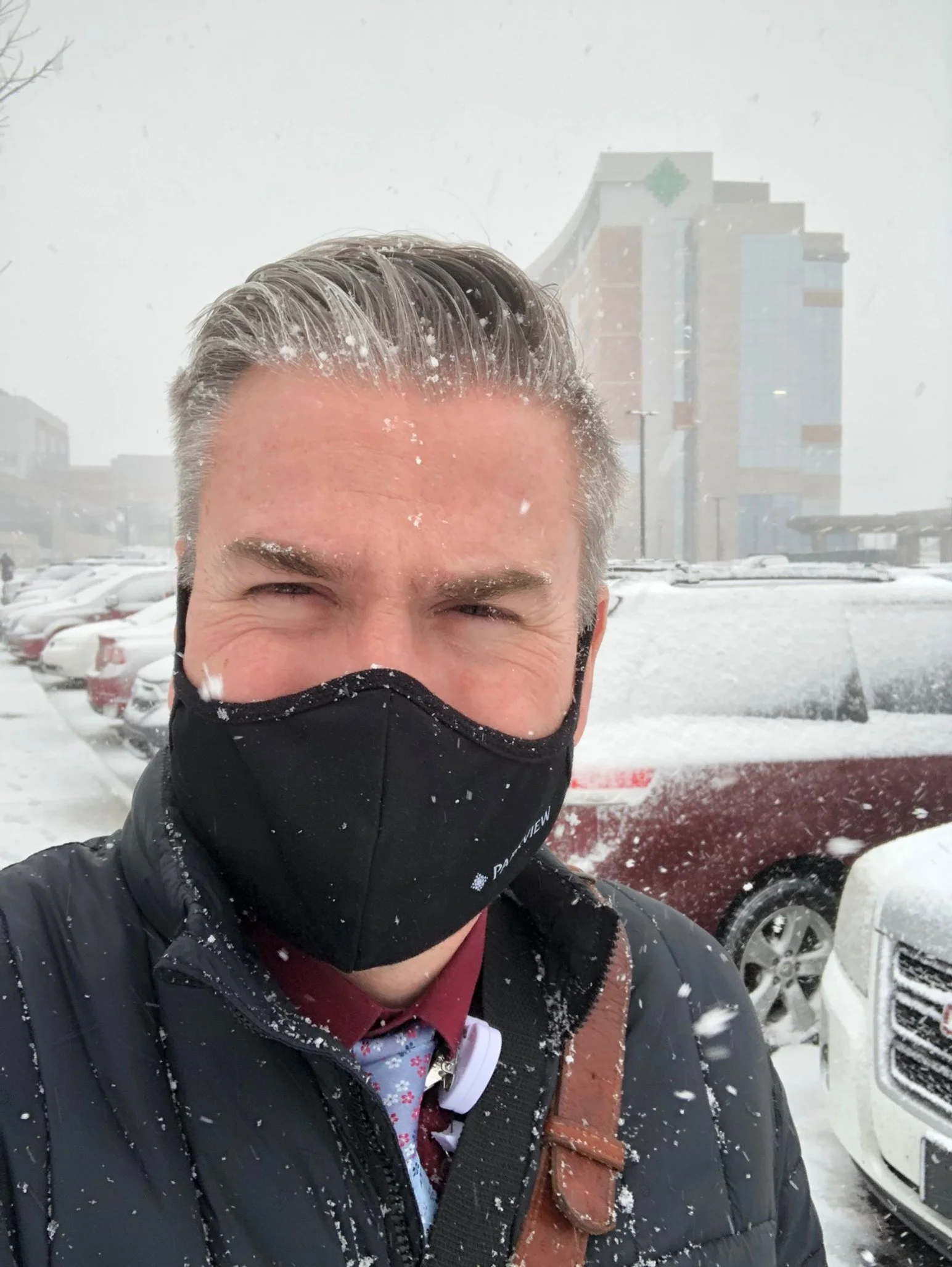
When a winter storm is approaching, hospitals don’t wait to see what happens. They prepare—because they don’t close.
The 24/7 Nature of Healthcare
The 24/7 nature of healthcare, especially on the inpatient side, is difficult to fully appreciate until you experience it firsthand. Severe weather doesn’t pause illness, injury, or emergencies. People still need care, and the system is built to respond.
I remember the first time a major weather event was forecast after I started working in healthcare. It was eye-opening. Conference rooms were converted into sleeping spaces. Air mattresses and pillows were pulled from office closets. Staff were told they might need to stay until relief could arrive. Public Safety and Grounds teams doubled their presence to keep operations running safely.
The message was clear: patient care continues, no matter what.
To be clear, I support that wholeheartedly. It’s one of the things I admire most about healthcare.
In 2022, our second son required an emergency appendectomy in the middle of a significant winter storm that forced many other businesses to shut down. Despite the conditions, every physician, nurse, and staff member we needed was there—on time, prepared, and fully present. That experience reinforced just how deeply committed healthcare professionals are to the people they serve.
The Costs to Coworkers
At the same time, the always-on nature of healthcare comes at a cost. Long shifts, disrupted rest, missed family time, and the expectation to show up regardless of circumstances take a real toll over time. Dedication alone doesn’t make people immune to exhaustion.
This tension—between a system that must never stop and the humans who keep it running—is something I think about often. It’s also why I’ve focused much of my work on burnout prevention, recovery, and sustainability in high-stakes professions.
Healthcare doesn’t need less commitment. It needs better support for the people who carry that commitment day after day.
Help for the Helpers
For those interested in going deeper, I’ve created practical, CE-approved courses designed for healthcare professionals and leaders who want to better understand burnout and build more sustainable ways of working. You can explore those resources at MyBurnoutHub.com.
Upcoming Webinar—Beyond Stress: Why Burnout Is a Systems Issue
Burnout is still widely misunderstood.
Most of the advice people receive frames burnout as a personal problem:
+ Try harder.
+ Set better boundaries.
+ Practice more self-care.
While individual support matters, this framing misses something essential.
Burnout doesn’t begin with individuals.
It begins with systems.
When capable, committed professionals are consistently exhausted, detached, or losing their sense of purpose, the issue is rarely a lack of resilience. More often, it’s the result of sustained pressure created by workload expectations, role ambiguity, moral distress, and workplace cultures that quietly normalize overextension.
This is especially true in healthcare, education, and other service-oriented professions—fields where people are deeply motivated by responsibility, ethics, and care for others.
Stress and burnout are not the same thing
One of the most persistent problems in burnout conversations is the tendency to collapse burnout into “stress.” Stress is typically episodic and recoverable. Burnout is cumulative and structural. It develops when recovery is no longer possible within the system itself.
When burnout is treated as stress, the solutions offered are often mismatched. Telling burned-out professionals to “take better care of themselves” can unintentionally increase shame, reinforce isolation, and make burnout harder to name and address.
A different conversation about burnout
On Wednesday, January 28, I’m hosting a live Webinar titled Beyond Stress: Why Burnout Is a Systems Issue. This is a teaching-focused session designed to offer clarity, shared language, and a more accurate framework for understanding burnout.
During the session, we’ll explore:
How burnout differs from stress
How organizational expectations, workload, and culture contribute to burnout risk
Why individual-focused solutions often fall short
What leaders and organizations can change without new budgets or sweeping reforms
This session is designed for healthcare professionals, educators, leaders, and anyone supporting others in high-pressure environments. Attendance and Q&A are anonymous, and continuing education credit is available.
If burnout has felt personal—heavy, confusing, or hard to articulate—this conversation is meant to help reframe it. Not to excuse harm, but to name it accurately. And to begin shifting the responsibility for change back where it belongs.
When Trauma Doesn’t End at the Scene
At a bus stop in 2018, three siblings were struck and killed. Another young boy was critically injured.
Last week, the trauma from that incident claimed another life.
Paramedic Jacob Amos responded to the scene that day. He saw the children who were killed. He treated the critically injured boy—who was later transferred to my hospital.
Last week, Jake died as a result of PTSD.
According to his memorial, Jake sought treatment. He even entered inpatient care, trying to carry on. He continued working as a paramedic, which meant—inevitably—responding to other pediatric emergencies over the years.
The trauma didn’t stay in one moment. It followed him.
I was part of the team that supported the critically injured child after that bus stop incident.
I sat in consult rooms with his family.
I visited his hospital room during recovery.
When reporters repeatedly contacted the family, I worked with our hospital marketing team to stop it.
Even in my own journal at the time, I wrote about how devastating this was for everyone involved.
So when I saw the news of Jake’s death last week, I was deeply saddened.
But I was also furious.
Not at Jake.
According to some commentors, his department didn’t provide any mental health resources to Jake or his colleagues after that horrific call. If that’s true (and it often is), it makes me so angry.
I applaud Jake for seeking treatment. Many people never do. That takes courage.
And here’s the harder truth we don’t like to say out loud:
Healthcare has always been hard.
Before COVID.
Before acts of violence in hospitals.
Before political interference and non-science
It has always been hard.
Why?
Because people die.
Kids die.
And people care.
When you care deeply, you don’t just clock out of trauma. You carry it.
Jake’s death is not a failure of effort or willpower. It’s a reminder that exposure to repeated trauma—especially when it’s unrelenting and cumulative—affects people.
And that good, dedicated professionals can still be overwhelmed, even when they try to get help.
So here’s the ask—plain and urgent:
Check on your coworker.
Check again, even if they say they’re “fine.”
If you’re a leader, this is not optional. Supporting coworkers after crisis is part of the job
If you want to preview my on-demand leadership course, Supporting Coworkers in Crisis, you can find it here:
👉 https://www.myburnouthub.com/leadership-essentials-section-4
Because caring for people who care for others isn’t soft work.
It’s necessary work.
How Dr. Martin Luther King Jr. Changed My Direction in Life
Martin Luther King Jr. changed many lives. He changed mine in 2008.
At the time, I was serving in ministry at my home church—a good place, and a comfortable one. But it was clear that season was ending. The question wasn’t if I would leave, but what came next.
I saw two options:
Apply to serve as a preacher somewhere else, or
Go back to school.
Kristen and I decided to step away for a few days and think. We took a retreat to Colorado with one simple purpose: to reflect on the previous five years and discern what was next.
In the lodge where we were staying, I found a biography of Dr. King. I picked it up and read it cover to cover.
For years, I had admired his oratory, his courage, and the way he wove faith into public life. But this time, something new stood out to me. One reason Dr. King was chosen to be a public leader wasn’t only his conviction or charisma—it was the two letters before his name.
Dr.
His education opened doors. It gave him credibility in rooms of power and allowed his voice to carry further. That realization mattered more to me than I expected.
During that retreat, largely inspired by Dr. King’s example, Kristen and I decided that I would go back to school.
That decision changed the trajectory of my life.
It led to exposure to a more expansive view of faith and the world (with deep gratitude to Tom Thatcher and Jon Weatherly). It qualified me for the role of Director of Chaplaincy at Parkview Health. Eventually, it led to earning a graduate certificate in Diversity, Equity, and Inclusion from Cornell University.
Today, as I watch news coming out of Minnesota and witness the continued rise of violence, polarization, and othering in our country, I find myself returning again to Dr. King’s words—and to his insistence that justice requires persistence.
“No, no, we are not satisfied, and we will not be satisfied until justice rolls down like waters and righteousness like a mighty stream.”
New Year. New You.
Yeah, I know. That title is kind of B.S.
January is a 💩time to start a new year. It’s cold. We’re sick. We’re broke from the holidays.
And tired. Oh. So. Tired.
You know the stats—92% of people give up on their new year resolutions within a month or so.
It’s January 16, so maybe you already feel lost.
What Burned Out People Need
What burned out people need isn’t to double-down on the grind or to shame ourselves into submission.
We do need something for ourselves, though.
We need—-agency.
Personal agency is an individual's capacity to make choices, take purposeful actions, and feel they have control over their own life.
When we have a stable sense of personal agency, it enables us to pursue our own goals rather than being passively controlled by other forces.
Burnout is the thief of agency.
Burnout and Your Sense of Self
Let’s revisit the three characteristics of burnout:
Emotional exhaustion—”I am too tired to make decisions to care for myself.”
Cynicism—”Nothing really matters.”
Lack of personal efficacy (loss of purpose)—”I don’t really matter.”
The most meaning endeavor that a burned-out professional can take is the path of Rediscovering Themselves.
Have you lost yourself in your work?
Lost touch with friends?
Unsure what you would do in your free time (if you had any)?
Feel like you are “always on” when it comes to your work?
Rediscover Yourself
Through bucket lists, self-forgiveness, and keeping our work in perspective, we can regain the elusive sense of personal agency.
Enroll in Rediscovering Yourself, an on-demand course that will help you:
Figure out what you want to do
Gain emotional distance from your work and
Regain confidence that you matter—not just the work you do
The course will take you about an hour, and you’ll end up with your very own bucket list, a renewed sense of self, and boundaries help make it stick.