
Blog
Leadership, Burnout,
and the Realities of Work
Practical posts drawn from healthcare leadership,
coaching, and real-world experience.
Burnout, Agoraphobia, and Healing: My Personal Journey
Burnout doesn’t just drain your energy at work—it can spill into every part of your life. For me, one of the hardest and least-shared parts of my burnout journey was agoraphobia.
Agoraphobia meant I felt anxious in groups, meetings, or even simple gatherings. While I’ve always leaned introverted, this was different. You’re not supposed to panic on your way to the grocery store or feel dread before a family function. But from about 2021 through 2023, that was my reality.
The Hidden Indicator of Burnout-Related Agoraphobia
The clearest signal that something was wrong? The overwhelming joy I felt whenever a meeting was cancelled.
Sure, a last-minute cancellation can feel like a blessing to anyone. But for me, the relief was out of proportion. I wasn’t just glad to have time back—I was escaping anxiety. Social obligations felt heavy, meetings felt suffocating, and even casual gatherings made me want to retreat.
This was burnout mixed with social anxiety, and it made daily life difficult.
Signs of Healing from Burnout
The turning point came recently when a colleague cancelled a meeting we had scheduled. Instead of relief, I felt… disappointed. I realized I had been looking forward to connecting with them.
That moment stopped me in my tracks. It was evidence that something had shifted inside me.
I’ve noticed other changes too:
I enjoy going out with my wife, Kristen, to places like Vinland Winery or a local high school football game.
I appreciate running into people at the coffee shop again.
And I don’t celebrate every cancelled meeting anymore. Sometimes, I even miss them.
These may seem like small things, but for me, they mark a huge step forward in burnout recovery.
Burnout and Social Anxiety: Not Always Connected, But Sometimes Linked
Not everyone who experiences burnout also develops agoraphobia or social anxiety. But for me, the two were intertwined. As the burnout lifted, so did the fear of social situations.
That’s why this milestone feels so important: my body and mind are both healing.
A Reminder for Anyone Facing Burnout
If you find yourself dreading connection, avoiding people, or feeling anxious about ordinary events, you’re not broken. Burnout and social anxiety can overlap and recovery takes time.
But healing is possible. One day you may notice, like I did, that you’re no longer celebrating every cancellation. Instead, you might be looking forward to the conversation, the connection, or even the crowd.
That shift is worth noticing, and worth celebrating.
The Burnout Hub: Real Solutions for Burnout Recovery and Prevention
Burnout is everywhere.
Leaders are exhausted.
Teams are overwhelmed.
And too many people are quietly wondering how long they can keep this up.
If that sounds familiar, you’re not alone. Burnout has become one of the biggest challenges facing today’s workforce. But there are real solutions—and that’s why we built The Burnout Hub (TBH).
What Is The Burnout Hub?
The Burnout Hub is an on-demand resource designed to help both individuals recover from burnout and equip leaders to create healthier workplaces. Instead of vague motivational slogans, TBH offers practical tools and step-by-step guidance that you can put into action immediately.
Inside The Burnout Hub
When you join TBH, you’ll find a comprehensive set of resources tailored to both personal recovery and leadership development:
Two Clear Paths
Personal Recovery Journey: A 5-Week Burnout Recovery Kickstart to help you rebuild energy, regain clarity, and rediscover balance.
Leadership Training Path: A 52-Week Leadership Development Program with weekly lessons that show leaders how to reduce burnout, foster psychological safety, and build resilient teams.
The Download Hub
Access 25+ printable PDFs, guides, and tools ready to use, share, and apply in real workplace situations.
Certificates of Completion
Earn recognition as you progress through the Leadership Training Path. These certificates can be added to professional development plans or employee growth initiatives.
Live Group Coaching Calls
Each month, you can join me and a community of leaders and coworkers for real conversations about burnout. These live sessions provide actionable strategies, encouragement, and connection.
Why The Burnout Hub Works
Most employees don’t need another motivational poster or a one-time seminar. They need ongoing tools, real conversations, and a clear path forward.
The Burnout Hub was designed to remove the guesswork. Whether you’re an individual searching for recovery, a leader trying to support your team, or an organization looking for scalable solutions, TBH meets you where you are—and helps you take the next step.
Start Your Burnout Recovery or Leadership Path Today
Burnout doesn’t have to define your career, your leadership, or your organization. With The Burnout Hub, you’ll gain access to proven frameworks, practical tools, and a supportive community—all designed to help you and your team thrive.
93% of Healthcare Workers Report Burnout: What We Learned in One Powerful Day
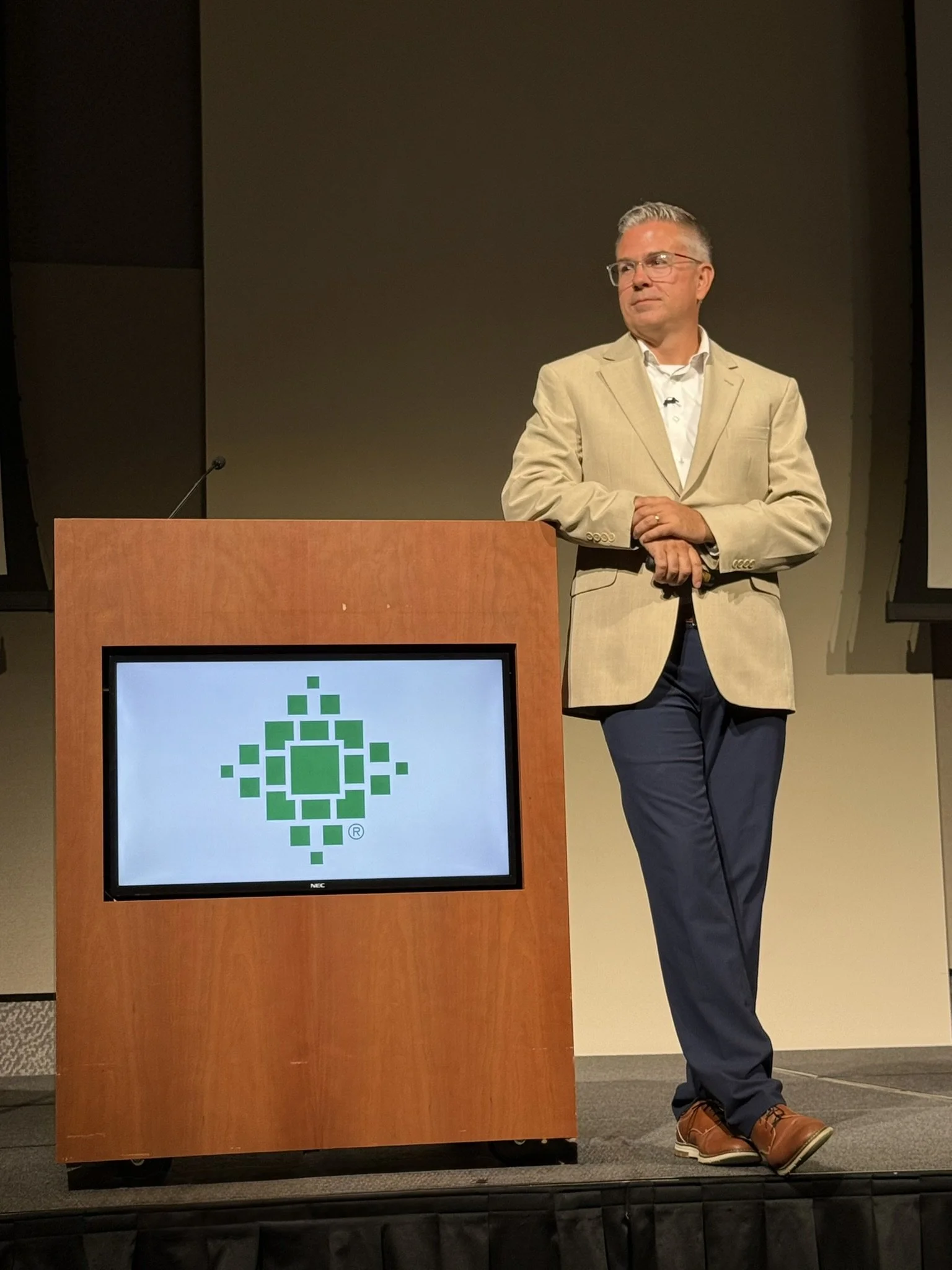
Last week, I had the privilege of leading my very first full-day conference on burnout. Walking into a room full of healthcare professionals, I could feel both the weight of their responsibilities and their hunger for real solutions. By the end of the morning, one thing was clear: nearly everyone in that room had felt the sting of burnout. In fact, 93% of participants said they had experienced at least one characteristic of burnout in the past year.
That statistic doesn’t surprise me anymore, but it still stops me in my tracks. Burnout isn’t just an occasional challenge—it’s the room we’re all sitting in. And yet, when we gather to talk openly about it, something powerful happens: relief, connection, and the beginning of recovery.
A Day of Conversations, Not Just Content
This wasn’t just another lecture. Throughout the day, we talked. I built time into each session for “Table Talk,” five-minute conversations at every table where coworkers could process what they were hearing and apply it to their own experience. The room came alive in those moments. Leaders, nurses, social workers, and other professionals leaned in, asked questions, and reflected honestly on their struggles.
We also experimented with live polls and Q&A. What stood out was how eager people were to engage. Anonymous questions poured in. Real, raw concerns about leadership, team support, and how to keep going when exhaustion sets in.
What Stood Out
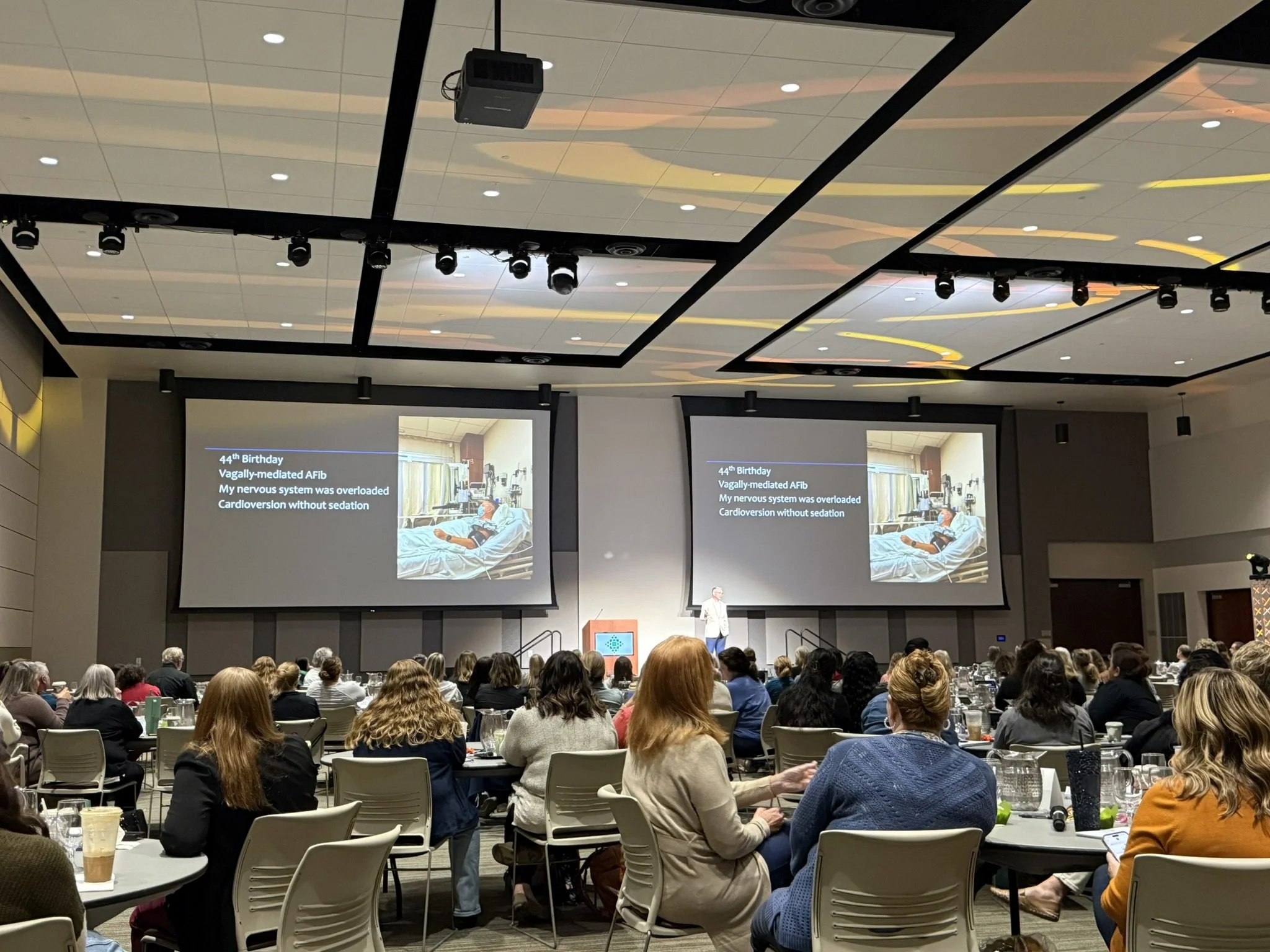
For me, this day marked the first time I presented on some new topics like management tactics, difficult conversations like discipline and even firing, and how grief support intersects with burnout recovery . These aren’t easy subjects, but they are real, and people in the room knew it. Many of the attendees were leaders, and they weren’t shy about voicing their need for guidance.
The feedback confirmed that vulnerability matters. Over and over, participants wrote that hearing personal stories—my own experiences with burnout, as well as stories of others—was what made the day meaningful. It reminded me why I keep telling my own story: not because it’s comfortable, but because it opens the door for others to tell theirs.
How Attendees Responded
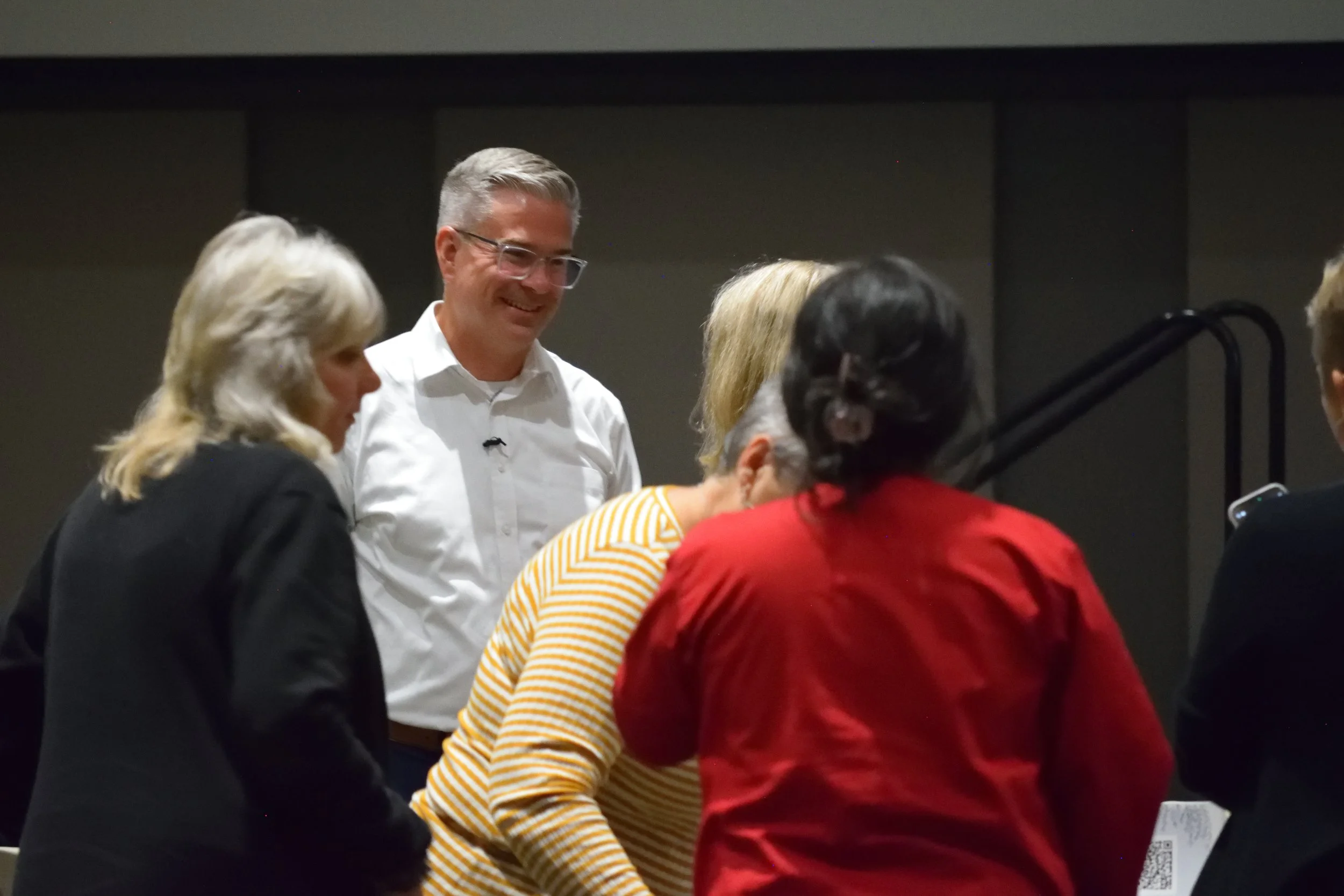
At the end of the day, we asked people to rate the presentation on a scale of 1 to 5. The average score came back at 4.94 out of 5. But more than the number, it was the comments that encouraged me most.
When asked which practices they planned to use for recovery, the most common responses were striking. Many people said they would start by making a bucket list; a reminder that burnout recovery isn’t only about reducing stress but also about rekindling joy. Others committed to adjusting expectations of themselves, paying attention to their nervous systems, and drawing boundaries. These are simple, human practices, but they create real change.
Why This Matters
If there’s one headline from the day, it’s this: burnout is common, but it’s not inevitable. When 93% of people in the room say they’re experiencing symptoms, we have to pay attention. And when leaders and coworkers have the courage to talk about it together, we can start to change the culture.
Burnout doesn’t go away because we hope it will. It requires awareness. It requires solutions. And most of all, it requires conversation. That’s what this day was about—opening the conversation and then moving toward practical steps for both personal recovery and organizational change.
Looking Ahead
As I reflect on this event, I’m grateful for the people who showed up with honesty, for the conversations that sparked courage, and for the hope that continues to rise when we take burnout seriously. This wasn’t just a one-day conference. It was a glimpse of what can happen when organizations choose to talk about the hard things and equip their people with tools to recover and thrive.
My hope is that this kind of conversation doesn’t stay contained to one room on one day. It’s needed everywhere because the people doing the hard work of caring for others can’t afford to burn out themselves.
Closing Thought
If your organization is ready to raise awareness about burnout and explore real solutions, I’d love to be part of that conversation.
Written by Patrick Riecke, Burnout Awareness Advocate
When Doing the Right Thing Feels Impossible: Moral Distress in Healthcare
How common is moral distress in healthcare?
Much more than we talk about.
Last year, our teenage daughter had a sudden medical episode at home. One moment she was fine, and the next, she could barely stay conscious.
“Call 911,” I said to her brother, who also works in healthcare.
“Already on it,” he replied without hesitation.
I helped her lie down as he calmly gave the dispatcher our address and explained her condition. She drifted in and out, her ability to speak waxing and waning.
Then, before the amazing paramedics from Northeast Allen County Fire and EMS arrived, she managed to whisper a question that stopped me cold:
“Do I really need an ambulance?
Won’t that be expensive?”
When the Cost of Care Shapes Decisions
A kid.
So sick she was passing out.
And she was worried about the bill.
The worst part?
She wasn’t wrong.
Ambulance rides, ER visits, diagnostic testing — they all add up. Across the country, sick people everywhere are hesitating to seek necessary medical help because of the financial strain.
This isn’t just about affordability for patients.
It affects healthcare workers, too.
The Ripple Effect on Healthcare Workers
Imagine being a nurse, paramedic, or physician and watching a patient refuse care not because it isn’t needed, but because they’re afraid of the cost.
That tension—knowing what’s medically right but being constrained by finances, policies, or systemic issues—is called moral distress. And it’s everywhere.
For patients, moral distress sounds like:
“I can’t afford the care I need.”
For healthcare professionals, it often sounds like:
“I know what’s right for this patient…
but I can’t do it.”
The emotional weight of those moments can be devastating for everyone involved.
No Easy Answers, But We Can Talk About It
Thankfully, our daughter is okay.
But I haven’t stopped thinking about that moment.
We need more honest conversations about:
The cost of necessary care
How financial fears impact decision-making
The emotional toll on healthcare workers
There’s no quick fix. But the first step is acknowledging the problem — for patients, for providers, and for the systems we work in.
Because ignoring moral distress doesn’t make it go away. Talking about it does.
Sustaining the Sustainers: Self-Care Strategies for Burnout Prevention in Healthcare
Guest Blog Post submitted by Jennifer Scott at Spiritfinder.com
Burnout doesn’t crash in—it erodes. One shift blurs into the next, and suddenly, the to care for others are unraveling themselves. It’s more than fatigue. It’s a fog that dulls purpose and drains empathy. But self-care isn’t a luxury—it’s a lifeline. The goal isn’t escape. It’s sustainability. What follows isn’t fluff or theory. It’s real-world self-preservation for people who keep showing up.
Protect Your Recharge Like a Vital Sign
You can’t heal others if your own system is drained. Sleep deprivation doesn’t just slow reaction time—it distorts empathy, judgment, and resilience. Instead of trying to power through, schedule sleep like you schedule rounds. Protect it like you would a patient on the edge. Many nurses have found renewed energy simply by choosing to prioritize sleep and rest as part of their clinical discipline, not a side project. Rest is not laziness. It’s preemptive care. Even 10-minute decompression rituals before bed—no screens, soft light, deep breaths—can tell your nervous system it’s safe to let go. Make that your baseline, not your backup plan.
Don’t Shoulder the Emotional Load Alone
You’ve seen the glazed-over eyes of a colleague in silent overwhelm. You’ve been them. Emotional survival in this field requires more than internal grit—it requires external holding. Programs built around using structured peer support have been shown to dramatically reduce emotional fatigue and isolation. This isn’t about forced vulnerability or sharing circles. It’s about having real-time access to someone who gets it—who knows the terrain, the tempo, and the toll. A five-minute decompression check with a peer after a difficult case can metabolize stress before it calcifies into exhaustion. Make connection part of your protocol.
Think Clearly When the Pressure’s High
Burnout clouds your thinking. Decisions feel heavier. Risks harder to calculate. In moments like this, don’t push through—slow down. Grounding yourself in a simplified mental protocol can make a huge difference in high-pressure scenarios. Insights on decision-making under emotional strain show that even basic interventions—like naming your emotion aloud or giving yourself a five-minute window before responding—can create space between stress and action. You don’t need to be perfect. You need to be functional. Reclaiming decision clarity isn’t about being smarter—it’s about creating a margin to breathe.
Contain the Spill Before It Becomes a Flood
Burnout isn’t always about volume—it’s about seepage. Work bleeds into your weekends. Emails echo in your skull long after you clock out. Setting limits isn’t selfish. It’s surgical. Healthcare workers who establish clear boundaries with real intention aren’t less committed—they’re more sustainable. That might mean turning off notifications after 7 PM. Or saying no to an extra shift without apology or guilt. Or even pausing before saying “yes” just to ask yourself: is this generosity or depletion? Boundaries create containers. Containers hold power. Without them, your energy will spill until nothing’s left.
Catch the Quiet Drift Before It Sinks You
You don’t wake up one morning and suddenly stop caring. It leaks out of you slowly—first in cynicism, then in detachment, then in dangerous indifference. The ability to recognize early signs of compassion fatigue is critical if you want to interrupt that drift. Look for subtle shifts: are you snapping at patients? Feeling numb after tough cases? Skipping meals not because you’re busy, but because you no longer feel you deserve them? That’s the edge. Name it. Bring it into language. Only then can you intervene before it swallows your purpose whole.
Anchor Your Body in the Middle of the Storm
There’s no time for a 30-minute meditation when you’re charting, monitoring vitals, and fielding a code blue. But there is room—always—for breath. Micro-grounding tactics aren’t indulgences. They’re stabilizers. Some of the most burnt-out ICU nurses regained their footing by using tactics nurses use during overwhelming shifts like hand-pressure resets, visual cues, or simply planting both feet flat on the ground mid-round. These tools don’t solve everything, but they reintroduce coherence. In the chaos, they offer a rhythm your body can recognize and return to. Try one. Then two. Let your nervous system relearn safety.
Burnout Isn’t Just Yours to Solve
This cannot be solved by individuals alone. If your hospital still treats self-care as your personal issue, they’re complicit in the drain. The data backs it: how workplaces can reduce provider burnout involves systemic, structural support. That means manageable caseloads. Paid mental health days. Built-in peer debrief time. Burnout isn’t just a mood—it’s a signal that the system itself is dysregulated. And the fix won’t be found in lavender oil or a better planner. Start asking: what policies are fueling this? What silences? What expectations? Then ask them out loud. Again. And again.
Burnout isn’t failure—it’s an alarm. You’ve been holding too much, for too long, with nowhere for it to land. But there’s a way forward. Boundaries, breath, support—they’re not indulgences. They’re what keep you steady. This work matters. So do you. Start building a system that includes your own survival.