
Blog
Leadership, Burnout,
and the Realities of Work
Practical posts drawn from healthcare leadership,
coaching, and real-world experience.
Bringing Dignity to Miscarriage: The Story of the Miscarriage Collection Cradle
“It was a great day for women.”

Laura Corcoran, creator of the Miscarriage Collection Cradle, and Kristen Riecke, the author of No Matter How Small: Understanding Miscarriage and Stillbirth
That’s how I’ve been describing the day we spent with Laura Corcoran, the creator of the Miscarriage Collection Cradle.
For anyone familiar with my feminist tendencies, you’ll fully understand my heart behind that statement.
One in four pregnancies ends in loss—most through early miscarriage. And for many women, the physical experience of that loss happens at home, alone.
They are told to “manage at home.”
Too often, they find themselves holding their baby’s remains in their hands, unsure what to do. Others watch helplessly as an automatic toilet flush takes their child from them forever.
Laura experienced miscarriage herself in her home in the U.K.
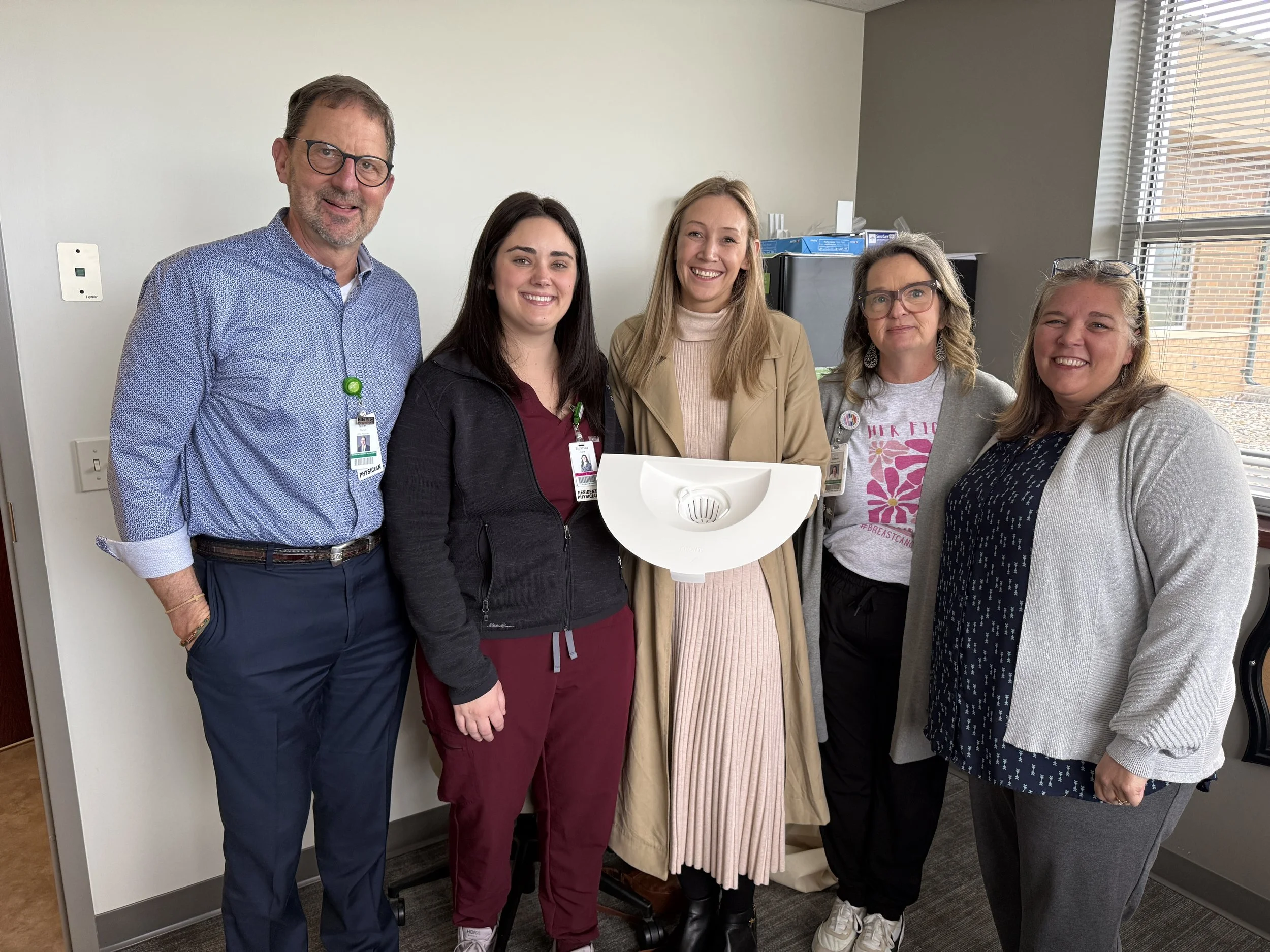
Laura Corcoran, creator of the Miscarriage Collection Cradle, visits the U.S.A. and introduces Parkview Health clinicians to this vital device, which collects and preserves miscarried remains.
Kristen and I lived our own miscarriage story nearly 25 years ago. That grief became the soil from which books, support groups, and a hospital bereavement program grew.
But Laura’s grief led her somewhere else: to fix an age-old problem that shouldn’t exist anymore.
As an engineer, Laura refused to accept that the only option was to fish your dead baby out of the toilet with a kitchen sieve.
In defiance, she created the Miscarriage Collection Cradle, a dignified way for women to collect and preserve their baby’s remains—for burial, for genetic testing, or simply for peace.
Her cradle is now an approved medical device used in 15 hospitals across the United Kingdom.
And last week, she brought it to Indiana.
Kristen and I had the privilege of hosting her as she met with local physicians, midwives, nurses, doulas, and people who care deeply about women’s health. She demonstrated the cradle to Dr. Geoff Gordon, Dr. Tom Miller, Kathy Detweiler, Mindy Leatherman, Erin Ross, and so many others who leaned in to learn and to listen.
One of the most moving parts of the day came when we introduced Laura to our friend, John Lozo. John runs the Forever In Your Heart program, using 3D scanning to capture the hands and feet of loved ones—minutes before or after death.
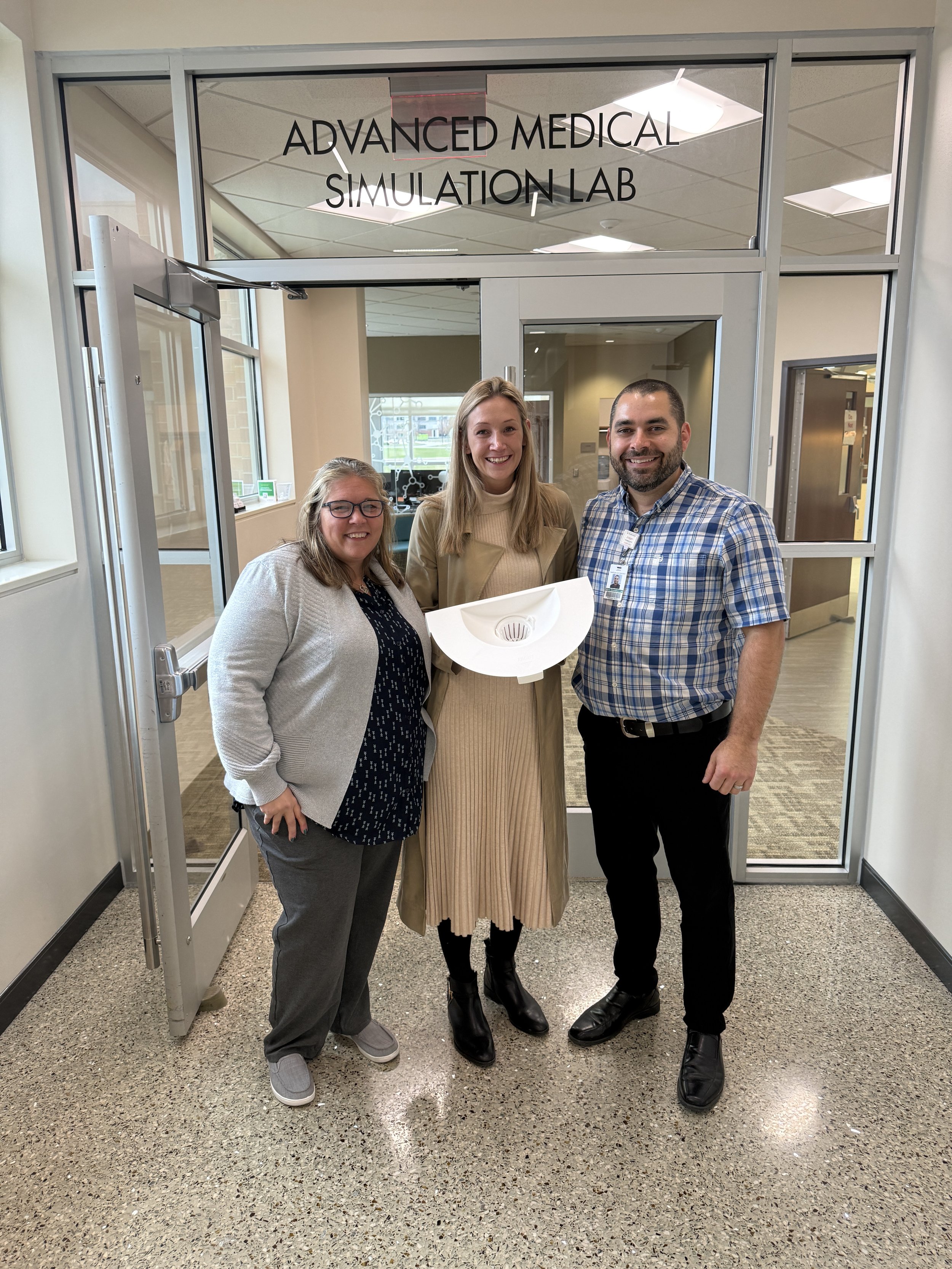
Two creators (Laura Corcoran and John Lozo) and an author, (Kristen Riecke) all dedicated to lessening the suffering of people in grief.
He then uses a 3D printer to create keepsakes: tiny baby footprints, fingerprints pressed into silver necklaces, statues of a grandparent’s hand—ready to be held by loved ones.
Laura builds devices that protect dignity at the beginning of death. John preserves the memory of the ones we loved. Two people, on different continents, both using their hands and their heartbreak to serve the grieving.
I don’t have their engineering or technological skills. But watching them meet was one of the most hopeful moments I’ve experienced in a long time.
Another beautiful part of this story is how it all began: on LinkedIn. The algorithm paired them together--the author of No Matter How Small and the engineer of a product collecting tiny people.

A good day for women and those who love them
To conclude the day, Kristen's sister, who desperately wishes she would have had a Miscarriage Collection Cradle in the past, drove for four hours to have dinner with Laura, Kristen, and (to a lesser extent) me.
Their embrace brought tears to our eyes--One of the millions of women in history who needed support during miscarriage and the one woman in history to develop a device to bring dignity to miscarried remains and the woman who carry them.
Our world seems so dark at times, and I can lose hope.
Yesterday. Yesterday was not one of those days.
For more on miscarriage and stillbirth, visit KristenRiecke.com for the internet’s most exhaustive list of resources on this topic.
Burnout Is Not Rare—It’s the Rule
Recent polls from my speaking events show what many of us already feel but don’t always say out loud: burnout is nearly universal. In healthcare, education, and other service-focused industries, almost everyone has experienced it in the past year. These numbers aren’t just statistics—they’re a wake-up call that burnout is no longer the exception. It’s the rule.
+++
At a recent event, I asked the audience a simple question: “Have you felt burned out at all in the past 12 months?”
The responses were overwhelming. Out of more than 120 participants, only 3% said no. Everyone else (93-96%) admitted they had.
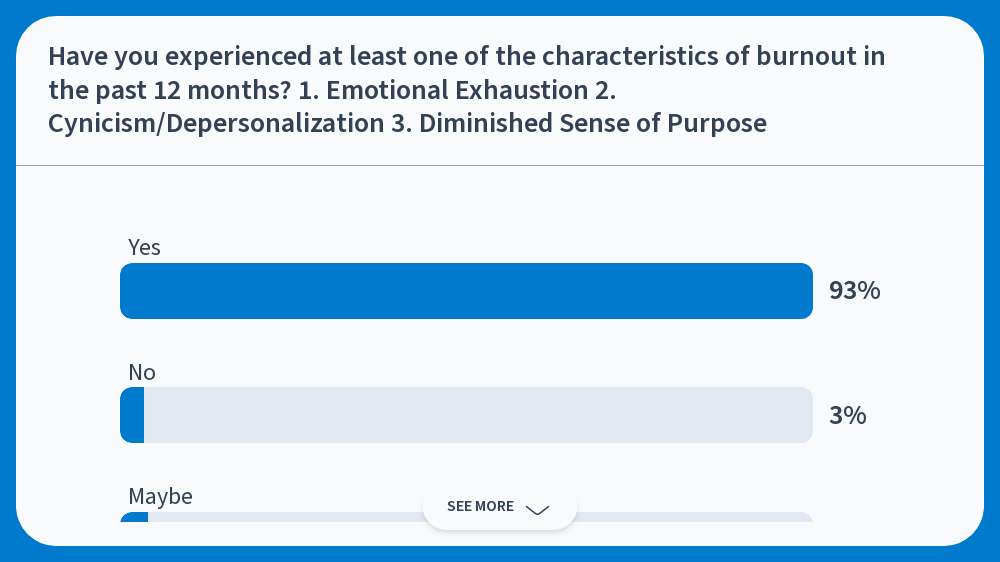
live poll results from a recent speaking engagement
At another event, 224 people answered the same question. Just 8 of them said they hadn’t experienced burnout. That means 216 people had.
Take a moment to let that sink in.
If we’re still telling ourselves that burnout is rare, that it only happens occasionally, or that it’s a sign of weakness, we’re lying to ourselves. The data and the lived experiences of people in the room prove otherwise.
Burnout has become an epidemic. It’s not just in healthcare (though the numbers there are staggering). It’s also affecting service-oriented industries across the board: K–12 education, higher education, and law enforcement, to name just a few.
The first step in solving a problem is acknowledging it exists. When it comes to burnout, denial is costly. People are suffering, workplaces are struggling, and communities are paying the price.
The good news? There are solutions. Recovery is possible. Prevention is possible. But none of that matters unless we start by facing the reality: burnout isn’t the exception. It’s the norm.
And it’s time we do something about it.
10 Meaningful Ways to Recognize Your Coworkers and Prevent Burnout at Work
I heard the conversation from down the hall. She was being so kind to the grieving family. “That’s how I want to be treated when my loved one dies,” I told my coworker when she got off the phone.
It wasn’t fancy. It wasn’t public. But she knew I had noticed.
And that her work mattered.
That’s the thing about recognition—it’s rarely about the reward. It’s about being seen.
In a time when healthcare, education, and nearly every profession are battling burnout, simple acknowledgment can become a lifeline. Recognition can’t fix everything, but it can absolutely shift the culture.
If you want to build a workplace where people stay engaged, here are 10 meaningful ways to recognize your coworkers—simple actions that reinforce connection, purpose, and wellbeing.
1. Start with Specific Praise
Generic compliments (“Good job!”) are easy to forget. Specific ones stick.
Say why you appreciated something:
“I noticed how calmly you handled that family’s frustration today. That kind of presence helps everyone.”
Recognition becomes powerful when it’s personal and timely.
2. Celebrate Effort, Not Just Outcomes
When leaders only acknowledge success, people learn to hide their struggles.
Recognize the process, too. The late-night problem-solving, the teamwork, the persistence through change.
Burnout thrives where people feel their effort goes unseen.
3. Make Peer Recognition Normal
Not every moment of appreciation should come from a supervisor.
Set up ways for coworkers to thank each other—a shared bulletin board, a digital shoutout channel, or five minutes during team meetings to share quick recognitions.
Peer-to-peer appreciation builds a culture of mutual respect.
4. Recognize in Real Time
Don’t wait for annual awards or quarterly reviews.
Catch someone doing something good and name it immediately.
A quick text, Teams message, or hallway thank-you creates more impact than a delayed acknowledgment six weeks later.
5. Include Everyone—Not Just the High Performers
Recognition should never feel like a popularity contest.
Make a point to appreciate quieter contributors; the ones who keep things running smoothly, help others, or lift morale in subtle ways.
True inclusion in recognition is one of the best forms of psychological safety.
6. Make It Visible (When Appropriate)
Public recognition has power when done right.
Consider a rotating “Wall of Thanks,” a newsletter section for shoutouts, or a quick mention in a staff meeting.
Always check for comfort levels. Some people would rather receive private acknowledgment.
7. Give Recognition That Matches the Person
Some people value words. Others value time or flexibility.
A handwritten note, a few extra minutes to breathe, or letting someone leave early after a rough shift—all count.
Meaningful recognition meets people where they are.
8. Connect Recognition to Mission
We all crave purpose.
When you thank someone, link their action to your organization’s mission:
“The way you supported that new hire reflects exactly why our team matters.”
This turns recognition into alignment—and alignment fuels engagement.
9. Create Rituals of Appreciation
Build recognition into the rhythm of your team:
End-of-week reflections
Monthly “gratitude rounds”
A “three thank-yous” rule in team meetings
Rituals remind everyone that noticing each other is part of the job.
10. Recognize Yourself, Too
Leaders who never receive recognition often struggle to give it.
Take time to reflect on your own progress, lessons, and resilience.
Self-recognition keeps you grounded—and models healthy self-awareness for your team.
Recognition as Burnout Prevention
Recognition isn’t fluff. It’s strategy.
When people feel valued, their stress response softens, creativity returns, and collaboration improves.
Organizations that weave recognition into daily life see lower turnover, higher engagement, and fewer symptoms of burnout.
And while it’s easy to think of recognition as “one more thing” to do, the truth is that it is the work.
When people know they matter, they can handle the hard days better.
If you’d like to keep the momentum going, you can purchase the full PDF of 101 Ways to Provide Recognition here, or sign up for The Burnout Hub and receive it for free.
From Zero to Two: The Power of Small Growth
We all have areas of life where we feel completely incompetent. Not just “a little shaky,” but truly: “I-don’t-even-know-which-tools-to-use” incompetent.
For me, “craftsmanship” (working with my hands) has always been that category.
Back in college, I took a spiritual gifts assessment. My score for craftsmanship? A flat zero. 🤣
From Zero to… Maybe a Two
Fast forward 25 years. I’d love to say I’ve become a skilled mechanic or handyman. The truth? At best, I’ve crawled my way up to a solid two out of ten.
Case in point: my recent attempt to replace the car radio in my daughter’s 2006 Honda Accord.
It wasn’t pretty. It wasn’t smooth. At one point, wires were everywhere, and I found myself questioning my life choices.
But here’s the key: I got it installed.
Now she has Bluetooth, Apple CarPlay, and navigation in a car that’s older than she is. More importantly, she’s driving around smiling and singing, enjoying her upgraded ride.
Her joy made my frustration worth it.
Growth Isn’t About Mastery
That project reminded me of something important: growth doesn’t come from magically becoming good at something.
It comes from showing up, trying, failing, learning, and then moving one step forward.
That’s how it’s been with starting and growing our business, too. Kristen and I used to say:
“We don’t know anything about running a business.”
Now we say:
“We’re learning about running a business.”
The shift isn’t about reaching perfection. It’s about adopting a learning mindset.
Why This Matters for Work and Life
Whether you’re leading a team, building a business, or simply trying to grow personally, the principle is the same:
You don’t need to be a ten to make progress.
Even moving from zero to two is growth.
The goal isn’t mastery. It’s momentum.
A Question for You
Where in your work or life do you feel like a total zero?
And what’s one small step you could take this week to turn that zero into a two?
Because progress isn’t about perfection. It’s about courage, persistence, and the joy that comes when growth (however small) pays off.
Supporting a Grieving Coworker: Why Leadership Matters
When a coworker loses someone close, everything changes.
How leaders and workplaces respond in those moments doesn’t just affect the next few weeks. It can impact that coworker’s engagement, trust, and sense of belonging for years to come.
That’s why this month on The Burnout Hub, our Featured Resource is Week 48 of the Leadership Training Path:
“When a Coworker is Grieving the Death of a Loved One.”
Why Workplace Grief Response Matters
Grief doesn’t stay at home. When a coworker experiences the loss of a loved one, the ripple effects reach into the workplace. How leaders handle that moment can either build a culture of compassion or deepen disconnection and burnout.
Responding well matters because:
It communicates to employees that they are valued as people, not just workers.
It builds trust and loyalty during one of life’s hardest seasons.
It helps the grieving coworker return to work with a sense of safety and belonging.
Practical Ways Leaders Can Support a Grieving Coworker
In this short training, I share ways leaders can take meaningful action:
Show up with compassion without overstepping – presence matters more than perfect words.
Support both the grieving coworker and the rest of the team – loss impacts everyone differently.
Create space for healing while still navigating workplace realities – balancing compassion with organizational needs.
What’s Included in This Training
The resource doesn’t stop at ideas—it provides tools you can use right away:
📄 A downloadable reflection PDF to help leaders think intentionally about their response.
📖 A bonus download of my book on grief for deeper learning and personal growth.
Why This Training Is Part of The Burnout Hub
Supporting grieving coworkers is just one of the 100+ micro-trainings inside The Burnout Hub. Each week, leaders are given practical, real-world strategies to prevent burnout, foster resilience, and lead with compassion.
The 52-Week Leadership Training Path equips leaders to:
Build healthier workplace cultures.
Respond with confidence during times of stress and crisis.
Prevent burnout before it takes hold in their teams.
Organizations across the country are beginning to use The Burnout Hub to make sure their leaders have resources like this—when it matters most.
Start the Conversation
If your organization doesn’t yet have access to The Burnout Hub, this might be the right time to begin. Your team doesn’t just need policies or productivity goals. They need leaders who know how to respond when life happens.
👉 Explore this month’s featured content.
Because the way we respond to grief shapes not just the moment—but the entire future of our teams.