
Blog
Leadership, Burnout,
and the Realities of Work
Practical posts drawn from healthcare leadership,
coaching, and real-world experience.
Burnout Recovery Strategies: How a Bucket List Can Help You Heal and Thrive
Burnout drains us of more than just energy. It robs us of hope, purpose, and a sense of possibility. When you’re stuck in the fog of exhaustion, cynicism, and overwhelm, it’s hard to imagine anything different. That’s why burnout recovery strategies are so important and why one of the simplest and most surprising tools is a bucket list.
Most people think of a bucket list as something you write later in life, dreaming of trips around the world or adventures you’ll “someday” get to. But when it comes to burnout recovery, a bucket list takes on a new role: it becomes a roadmap for self-care, renewal, and joy.
Why a Bucket List Is One of the Most Overlooked Burnout Recovery Strategies
When you’re burned out, your brain slips into survival mode. You stop looking forward, and you lose the joy of imagining what could be. A bucket list interrupts that pattern and helps you recover from burnout by reconnecting you with your desires.
But, a lot of burned out, others-focused people have a hard time starting their list.
Don’t know where to start?
Use these three frameworks to start or add to your bucket list:
Aspirational goals – The big, inspiring dreams that remind you life is more than your current stress. Maybe you’ve always wanted to learn a language, write a book, or see the Grand Canyon. These goals give you hope and direction. One that’s still on my list is a European vacation.
Quick wins – The small, doable actions that create immediate sparks of energy and accomplishment. Something as simple as trying a new restaurant, planting flowers, or booking a day trip reminds you that you still have agency. These quick wins are essential because they restore momentum.
Milestones – These are things that are likely to happen whether or not they are on your list. One of mine was “teach our daughter to drive.” Even if it wasn’t on my list, I would have done it. But adding it to the list helped me reframe it as a joy instead of only a responsibility. BTW: I didn’t fake it. I actually wanted to do this, which is the only reason it works as a bucket list item.
How a Bucket List Re-Wires Your Burnout Story
A bucket list doesn’t just create fun activities, it rewires your narrative. Burnout says: “You’re stuck.” A bucket list says: “You still have choices.” Burnout whispers: “You’ll never get your energy back.” A bucket list replies: “Look what you’ve already done.”
Each time you check something off—big or small—you create evidence that life can be more than just surviving another workday. That’s why my attendees and clients consider it one of the most practical burnout prevention tips: it helps you build hope, one entry at a time.
Step-by-Step: How to Create a Bucket List for Burnout Recovery
You don’t need an elaborate plan. Grab a piece of paper, or open the notes app on your phone, and try these steps to start your personal bucket list for burnout recovery:
Dream big – Write down five aspirational goals you’ve always wanted to pursue. Don’t worry if they feel far away. They’re supposed to inspire you.
Start small – Add five quick wins you could do this week or this month. Keep them bite-sized and energizing.
Build toward milestones – Choose one or two future events that are likely to happen and recast them as bucket list items. Remember, they have to be things you are actually excited about.
Celebrate progress – Every time you check something off, pause. Notice the energy it gives you. Recovery is as much about recognition as it is about action.
Burnout Recovery Is About Living Again
At its core, burnout is a crisis of meaning and a loss of agency. A bucket list restores that meaning by helping you imagine, act, and celebrate again. It isn’t about escaping work—it’s about remembering that your life is more than work.
If you’re searching for burnout recovery strategies that actually work, start with a bucket list. Fill it with aspirational goals, quick wins, and milestones that pull you forward. And as you begin to check things off, notice what happens: joy creeps back in, hope rebuilds, and burnout starts to lose its grip.
👉 Looking for more practical burnout prevention tips? Explore my resources on burnout recovery and prevention in The Burnout Hub.
They are desperately crying for help
When you talk about burnout as openly as I do--these conversations are inevitable.
Once or twice a week, I find myself on the listening end of one of these conversations. The other person--spilling over with sadness, anger, or frustration about their jobs.
They aren't complaining. They are desperately crying for help.
"And then..."
"I don't know how much longer I can..."
"My family doesn't understand..."
"I think that whole thing just traumatized me..."
Panic attacks.
Heart arrythmias.
Strokes.
Depression and suicidal thoughts.
Leaders who cast blame on them instead of offering support.
Workloads that are inhumane.
Shifting goals--they never know when they are succeeding.
If the conversation goes on for an hour, I usually talk for about five minutes.
They have to get it out.
They feel safe talking with me, so it spills out.
Near the end of our time on the Zoom call or in the coffeeshop, they start apologizing.
"I'm so sorry, I've just rambled on for so long."
"I know other people have it worse, and I don't know why this has been so hard for me."
"I thought I could tell the story in five minutes, but I guess not. I am sorry I've wasted so much of your time."
The cascade of feelings and retelling of their traumas is predictable.
The absence of a supportive leader is common.
The presence of distressing work--not just stress, but DISTRESS--is always a primary characteristic.
But the apology at the end tells me so much.
They are used to shutting up and showing up.
Even though they are burnt to a crisp with no energy left, they "soldier on."
That's why our conversation is like a dam breaking.
And it's why they feel guilty taking my time.
They aren't used to being cared for.
Listened to.
Affirmed or acknowledged.
As we close our time together, they become effusive in their gratitude.
"Thank you so much, this helped me more than you know."
"You probably think I am crazy now, but thank you so much for listening to me."
Remember, I did almost nothing.
Nothing but listen.
Care.
Support.
Acknowledge.
Help them feel seen.
These are some of the best people I've ever known.
Nurses and nurse leaders.
Physicians.
Teachers and professors.
Healthcare leaders.
They've given so much for so long in a system that is built for moral distress and burnout.
Over the weekend, I remembered.
This is why I travel to provide keynotes and workshops on burnout.
This is why I built The Burnout Hub.
This is why Erin Alexander and I wrote the book.
Because when I hear these burnout stories from these amazing humans--it makes me so angry.
They deserve better.
They deserve to be seen.
To be supported.
To be, in a word, loved.
Marshawn Kneeland other people who are right on the edge
Last week, Dallas Cowboys defensive end, Marshawn Kneeland, died by an apparent suicide.
Two days earlier, he scored his first touchdown in the NFL on Monday Night Football.
I am an Indianapolis Colts fan. The Cowboys are my second LEAST favorite team (just above the New England Patriots).
But, the Cowboys quarterback, Dak Prescott, has always held my respect. He regularly speaks out about mental health, and his grief over his mother, and the trauma of losing his brother, Jace, to suicide in 2020.
I had never heard of Marshawn, but his story is heartbreakingly familiar.
A successful man, who seems to have everything, faces a mental health battle that costs his life.
When I was in my darkest days of burnout, I was depressed, anxious, and had days that I wasn't sure I could go on.
Dan Orlovsky, former backup QB for the Colts, said, “As an athlete, I would’ve never told you I was struggling. … I feel like I’m conditioned like that. I feel like, honestly, as a man I’m conditioned to be that way.”
I can relate. [Not to the athlete part--I can pull a hamstring just getting out of bed.]
I am thankful that I had support.
Thankful that I've had so many opportunities.
And a nearly perfect life.
But that didn't keep me from struggling.
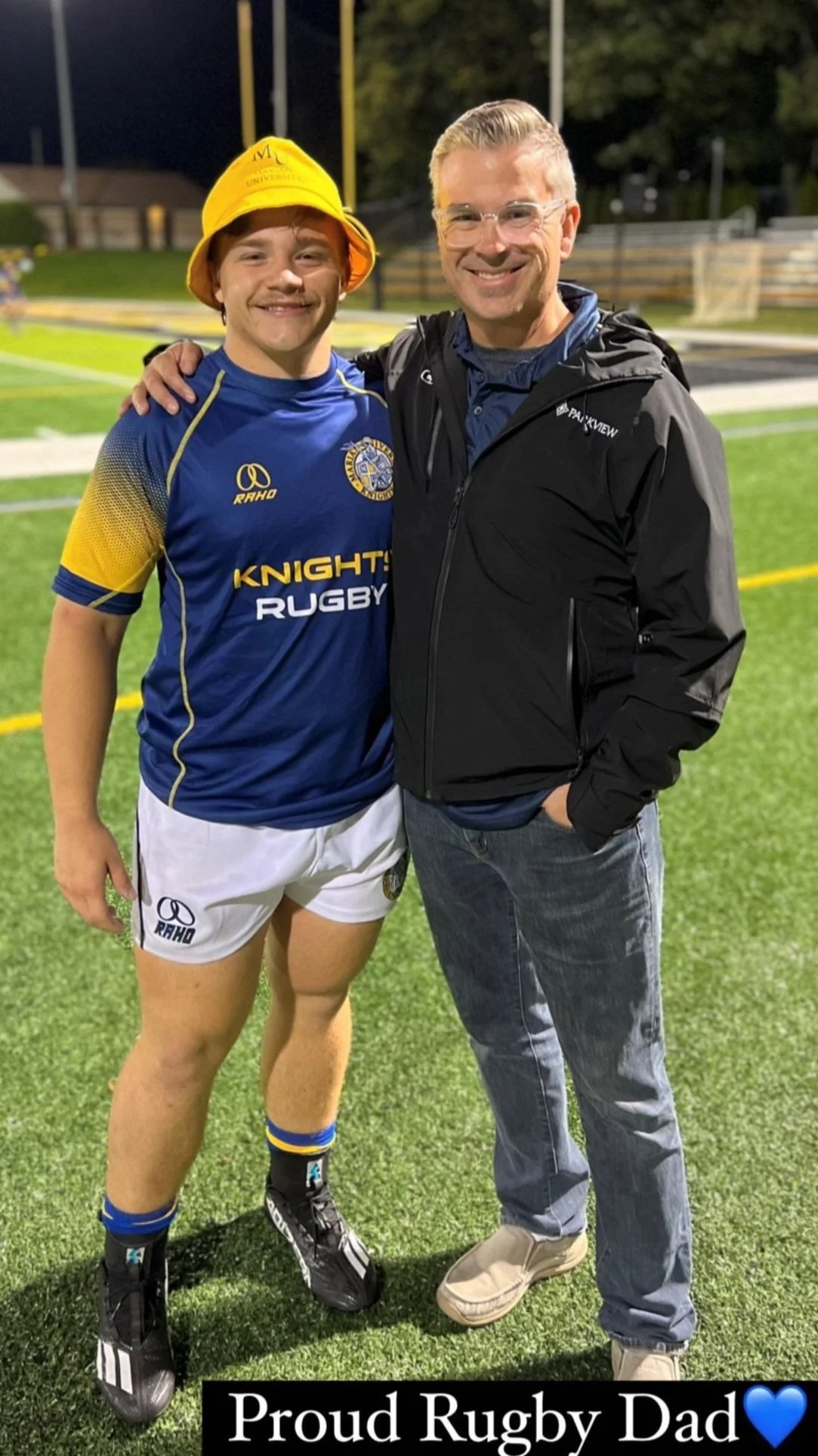
Sometimes, I share the below photo when I speak.
It was taken when I was in a very dark place.
The casual onlooker would never have known.
I am smiling, dressed nice, sporting a fresh haircut, and enjoying the amazing rugby action of the Marian University Knights led by our son, Daniel Riecke.
So, just a reminder that some people who scored a touchdown on MNF, and some people who are leading well at your organization are...
right on the edge.
I got therapy.
I got medication.
I had to make some changes.
And it took years to get to where I am today.
I am glad I made it.
P.S. Kudos to the Colts and Courageous Healing, Inc. with Janell Lane, MA, LMHC and Aaron Lane, MSOL, LSW helping to #kickthestigma.
Bringing Dignity to Miscarriage: The Story of the Miscarriage Collection Cradle
“It was a great day for women.”

Laura Corcoran, creator of the Miscarriage Collection Cradle, and Kristen Riecke, the author of No Matter How Small: Understanding Miscarriage and Stillbirth
That’s how I’ve been describing the day we spent with Laura Corcoran, the creator of the Miscarriage Collection Cradle.
For anyone familiar with my feminist tendencies, you’ll fully understand my heart behind that statement.
One in four pregnancies ends in loss—most through early miscarriage. And for many women, the physical experience of that loss happens at home, alone.
They are told to “manage at home.”
Too often, they find themselves holding their baby’s remains in their hands, unsure what to do. Others watch helplessly as an automatic toilet flush takes their child from them forever.
Laura experienced miscarriage herself in her home in the U.K.
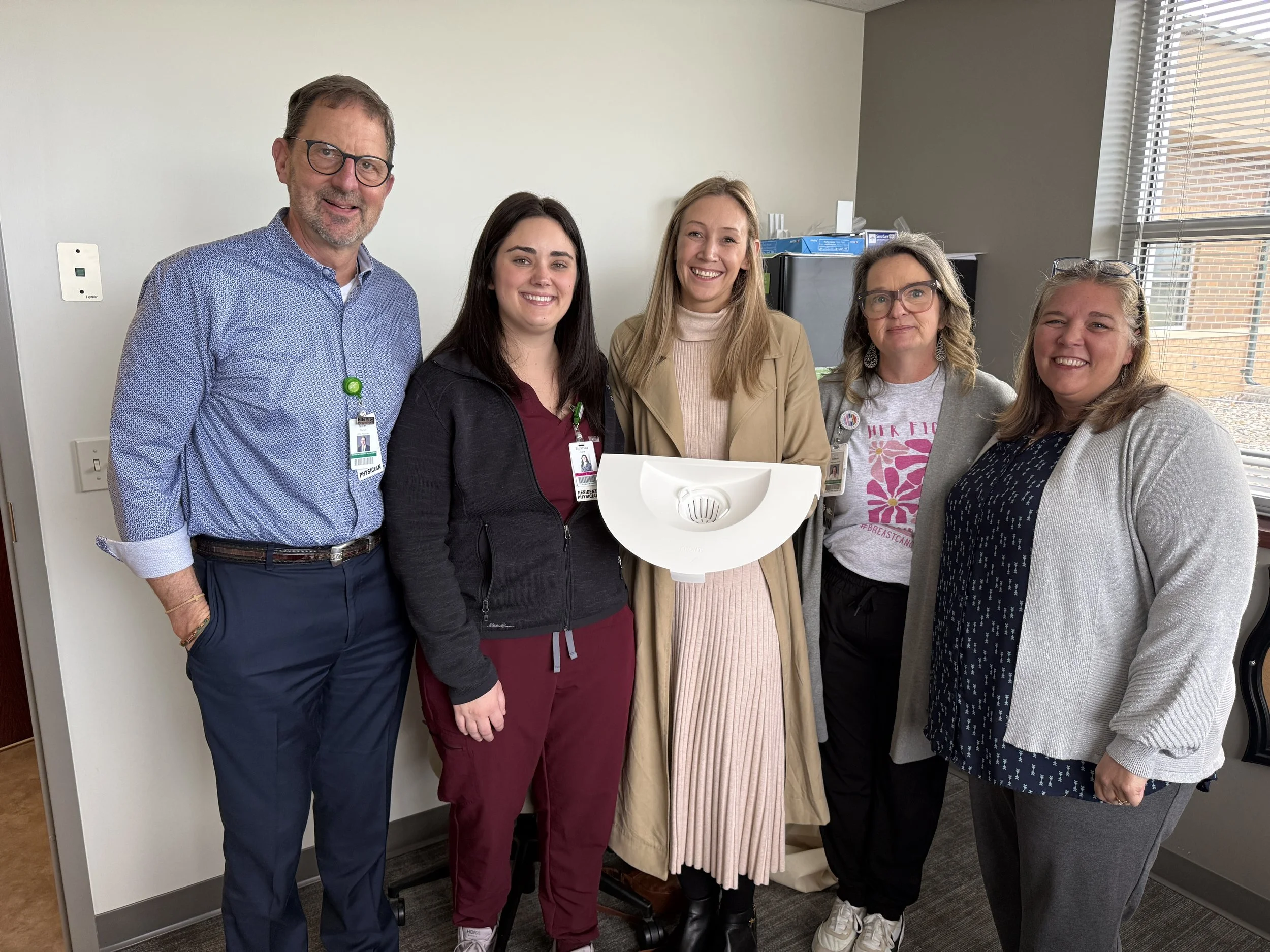
Laura Corcoran, creator of the Miscarriage Collection Cradle, visits the U.S.A. and introduces Parkview Health clinicians to this vital device, which collects and preserves miscarried remains.
Kristen and I lived our own miscarriage story nearly 25 years ago. That grief became the soil from which books, support groups, and a hospital bereavement program grew.
But Laura’s grief led her somewhere else: to fix an age-old problem that shouldn’t exist anymore.
As an engineer, Laura refused to accept that the only option was to fish your dead baby out of the toilet with a kitchen sieve.
In defiance, she created the Miscarriage Collection Cradle, a dignified way for women to collect and preserve their baby’s remains—for burial, for genetic testing, or simply for peace.
Her cradle is now an approved medical device used in 15 hospitals across the United Kingdom.
And last week, she brought it to Indiana.
Kristen and I had the privilege of hosting her as she met with local physicians, midwives, nurses, doulas, and people who care deeply about women’s health. She demonstrated the cradle to Dr. Geoff Gordon, Dr. Tom Miller, Kathy Detweiler, Mindy Leatherman, Erin Ross, and so many others who leaned in to learn and to listen.
One of the most moving parts of the day came when we introduced Laura to our friend, John Lozo. John runs the Forever In Your Heart program, using 3D scanning to capture the hands and feet of loved ones—minutes before or after death.
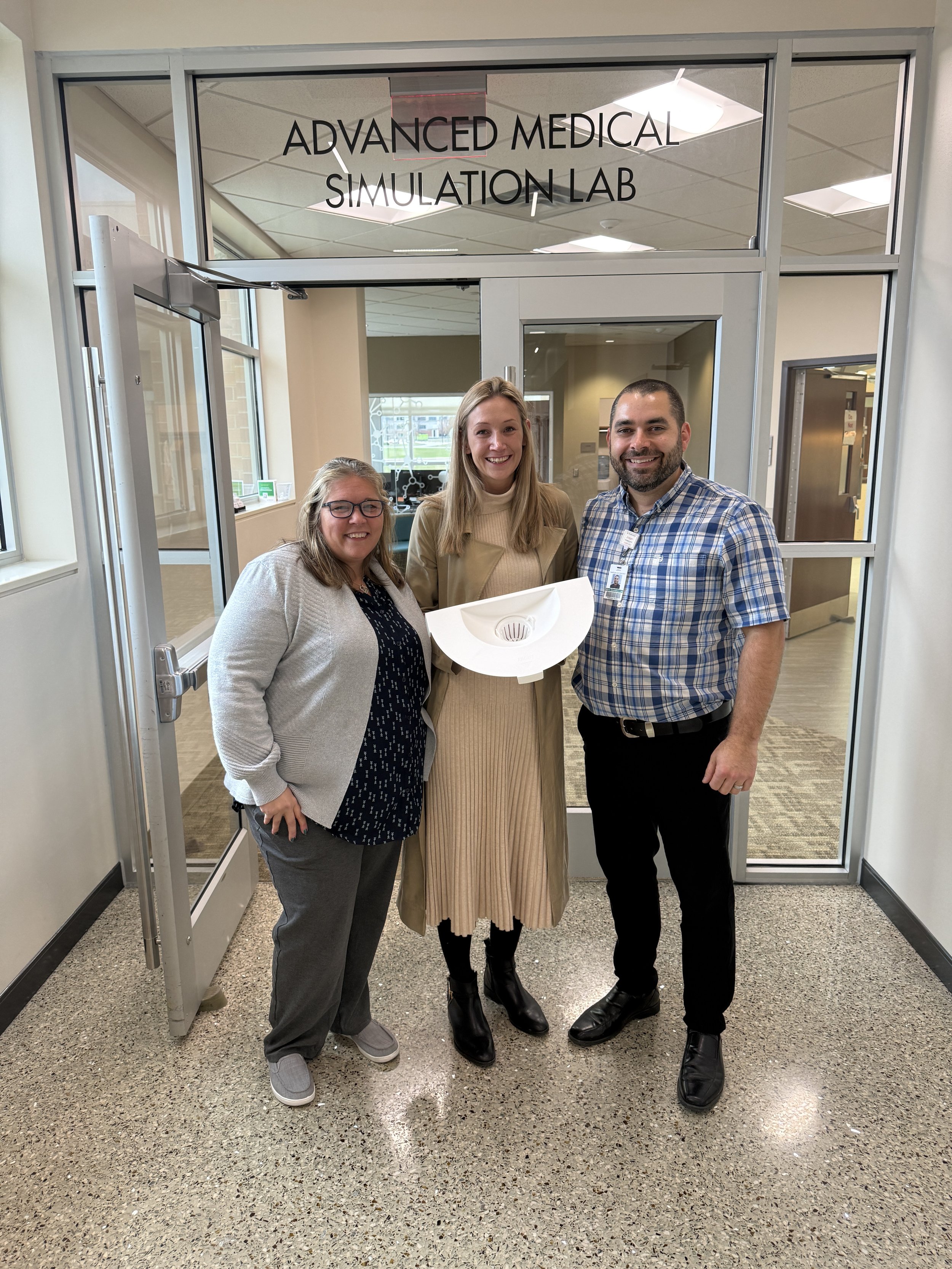
Two creators (Laura Corcoran and John Lozo) and an author, (Kristen Riecke) all dedicated to lessening the suffering of people in grief.
He then uses a 3D printer to create keepsakes: tiny baby footprints, fingerprints pressed into silver necklaces, statues of a grandparent’s hand—ready to be held by loved ones.
Laura builds devices that protect dignity at the beginning of death. John preserves the memory of the ones we loved. Two people, on different continents, both using their hands and their heartbreak to serve the grieving.
I don’t have their engineering or technological skills. But watching them meet was one of the most hopeful moments I’ve experienced in a long time.
Another beautiful part of this story is how it all began: on LinkedIn. The algorithm paired them together--the author of No Matter How Small and the engineer of a product collecting tiny people.
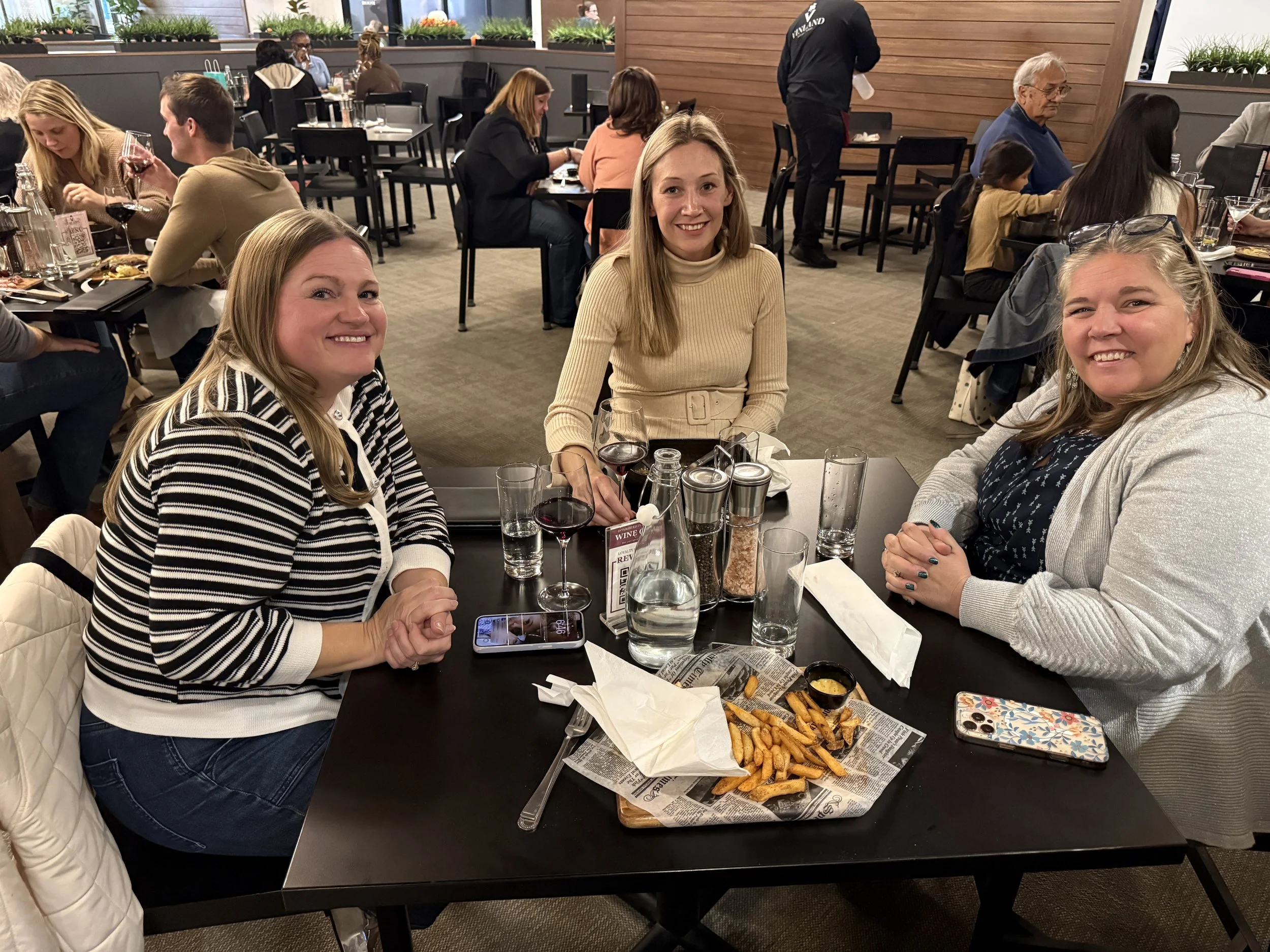
A good day for women and those who love them
To conclude the day, Kristen's sister, who desperately wishes she would have had a Miscarriage Collection Cradle in the past, drove for four hours to have dinner with Laura, Kristen, and (to a lesser extent) me.
Their embrace brought tears to our eyes--One of the millions of women in history who needed support during miscarriage and the one woman in history to develop a device to bring dignity to miscarried remains and the woman who carry them.
Our world seems so dark at times, and I can lose hope.
Yesterday. Yesterday was not one of those days.
For more on miscarriage and stillbirth, visit KristenRiecke.com for the internet’s most exhaustive list of resources on this topic.
Burnout Is Not Rare—It’s the Rule
Recent polls from my speaking events show what many of us already feel but don’t always say out loud: burnout is nearly universal. In healthcare, education, and other service-focused industries, almost everyone has experienced it in the past year. These numbers aren’t just statistics—they’re a wake-up call that burnout is no longer the exception. It’s the rule.
+++
At a recent event, I asked the audience a simple question: “Have you felt burned out at all in the past 12 months?”
The responses were overwhelming. Out of more than 120 participants, only 3% said no. Everyone else (93-96%) admitted they had.
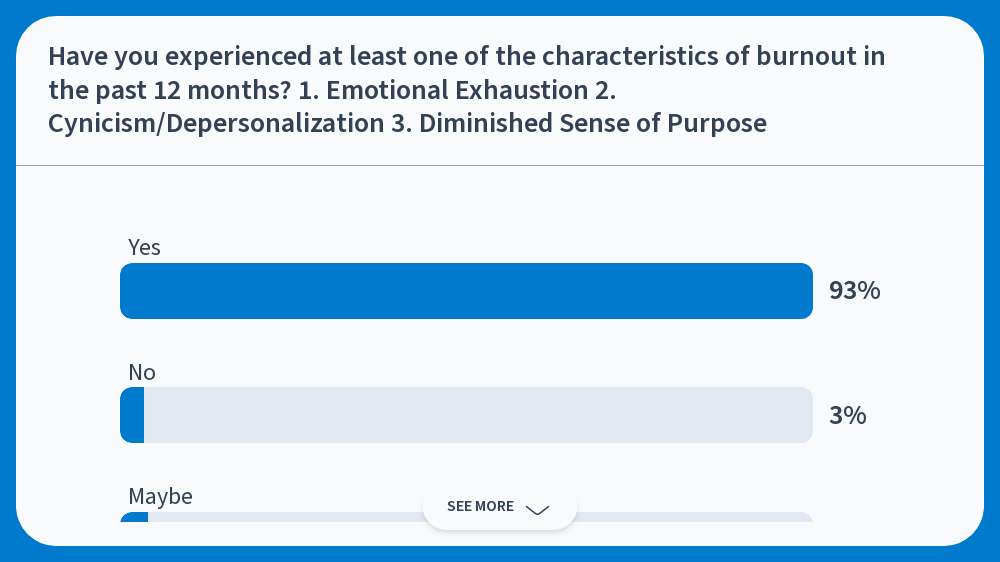
live poll results from a recent speaking engagement
At another event, 224 people answered the same question. Just 8 of them said they hadn’t experienced burnout. That means 216 people had.
Take a moment to let that sink in.
If we’re still telling ourselves that burnout is rare, that it only happens occasionally, or that it’s a sign of weakness, we’re lying to ourselves. The data and the lived experiences of people in the room prove otherwise.
Burnout has become an epidemic. It’s not just in healthcare (though the numbers there are staggering). It’s also affecting service-oriented industries across the board: K–12 education, higher education, and law enforcement, to name just a few.
The first step in solving a problem is acknowledging it exists. When it comes to burnout, denial is costly. People are suffering, workplaces are struggling, and communities are paying the price.
The good news? There are solutions. Recovery is possible. Prevention is possible. But none of that matters unless we start by facing the reality: burnout isn’t the exception. It’s the norm.
And it’s time we do something about it.