
Blog
Leadership, Burnout,
and the Realities of Work
Practical posts drawn from healthcare leadership,
coaching, and real-world experience.
9 Exit-Ramp Moves Before You Quit a Job That’s Burning You Out
Some people leave their job with a resignation letter. Others leave slowly—mentally, emotionally, and then physically when they finally can’t take it anymore.
If you're feeling done, exhausted, or stuck, quitting may be the right move. But it doesn’t have to be impulsive. There’s a better way to leave burnout behind—one that protects your mind, your finances, your reputation, and your future.
These are nine practical steps I coach people through before they walk away from a job that’s hurting them.
1. Name the Real Problem (Not Just the Symptoms)
Are you exhausted? Morally distressed? Underpaid? Unsupported? Or in the wrong role entirely?
Write it down. Burnout can’t be solved—or escaped—if you don’t know what’s actually causing it.
2. Get Clarity on Your Burnout Level
Don’t guess. Take a burnout test so you know where you stand.
You can use mine here: MyBurnoutTest.com
Clarity reduces panic and helps you choose your next step intentionally.
Sometimes clients discover that it’s not the job—it’s other stress. It would be awful to quit your job only to discover it wasn’t the real problem.
3. Ask for Role Tweaks Before You Walk Out
Sometimes you don’t need a new job—you need a different version of the one you have.
Consider asking:
Can we remove or reassign part of my role?
Can I shift to education, training, projects, or part-time leadership?
Can we test it for 30–60 days?
Even if the answer is no, you’ll know you tried.
4. Use the Benefits You’re Paying For
Before you resign, check if you have:
FMLA
Employee assistance counseling
Short-term disability
PTO banks that don’t roll over
Tuition or certification funding
Other benefits
It’s not selfish to use what’s available. It’s wisdom.
Review the complete list here.
5. Create a Wins + Impact Folder
Burnout lies. It says none of what you’ve done matters.
Start collecting:
Notes from coworkers or patients
Metrics or results
Emails that say, “Thank you” or “You helped”
This is your confidence file—and your future interview material.
6. Quietly Build Financial Margin
You don’t need to be rich to leave—you need to be prepared.
Trim a few monthly expenses
Build a small emergency buffer if possible
Understand health insurance options post-job
If you’re going self-employed, start laying groundwork now
7. Practice Boundaries Before You Practice Quitting
If you skip this step, you’ll repeat burnout in the next job.
Try language like:
“I want to do this well. With my current workload, the soonest I can complete it is ___.”
8. Get One Outside Perspective
Not from a coworker—it needs to be someone who isn’t tangled in your workplace dynamics.
A mentor, counselor, coach, or trusted advisor. Someone who can say, “Yes, this is serious,” or “No, you don’t have to set everything on fire.”
9. Decide: Can I Heal Here, or Do I Have to Heal Somewhere Else?
Not every workplace can change. Not every workplace will change.
Healing inside your current job might be possible. Or, it might not. Leaving—for the sake of your health and your future—might be the right next step.
You're Allowed to Take Yourself Seriously
Whatever you decide, it’s not failure to leave. It’s not weakness to stay and ask for change.
It’s only harmful if you keep pretending this isn’t affecting you.
If you want tools, scripts, coaching prompts, and full mini-courses like Before You Quit or Fixing Work Fixations, they’re inside The Burnout Hub:
https://www.myburnouthub.com/learn-more
And if you want me to train your organization or speak on burnout, moral distress, or leadership that protects people instead of draining them, you’ll find details here:
https://patrickriecke.com/live-presentations
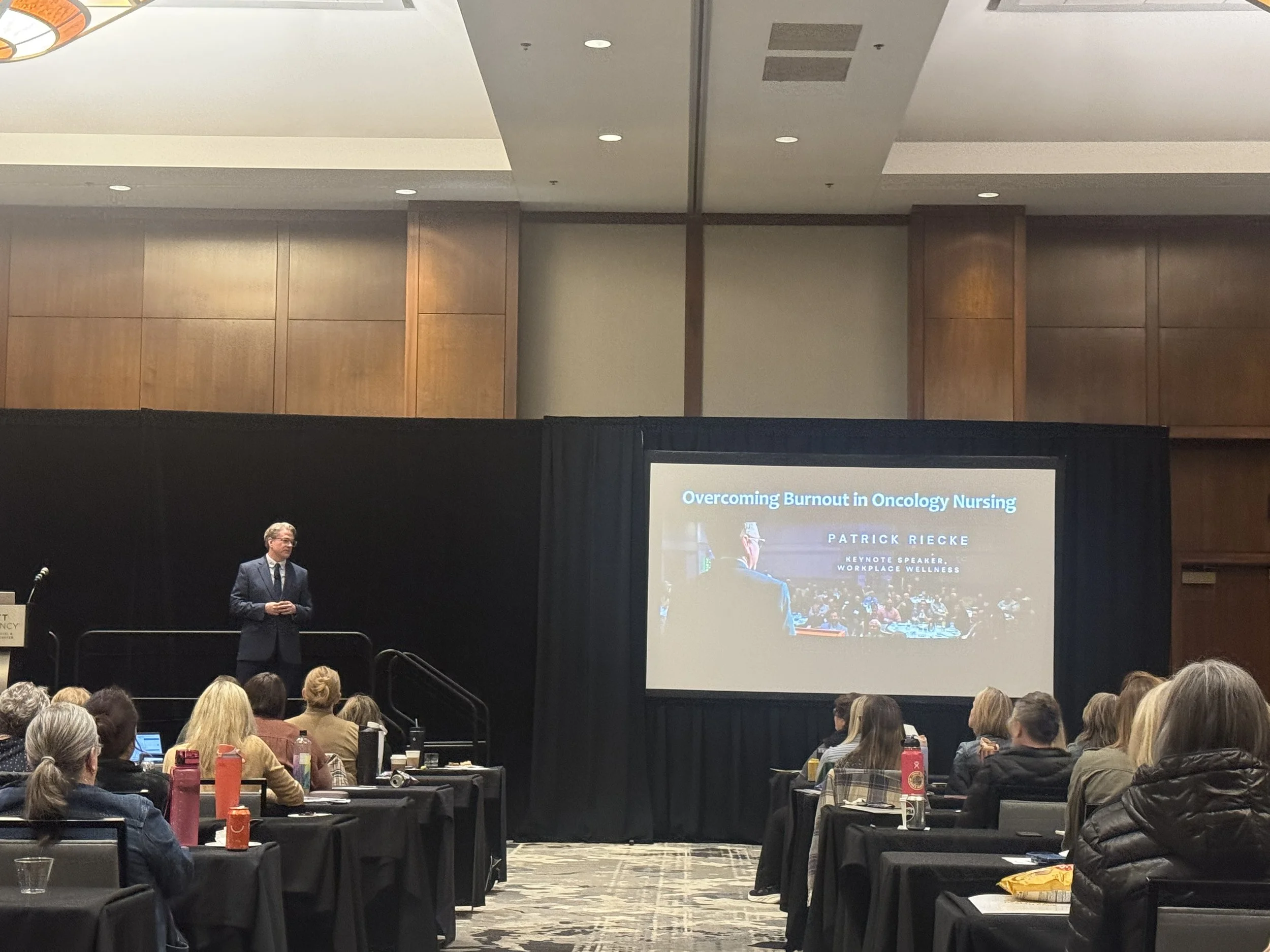
Cancer nurses, burnout, and a tornado warning

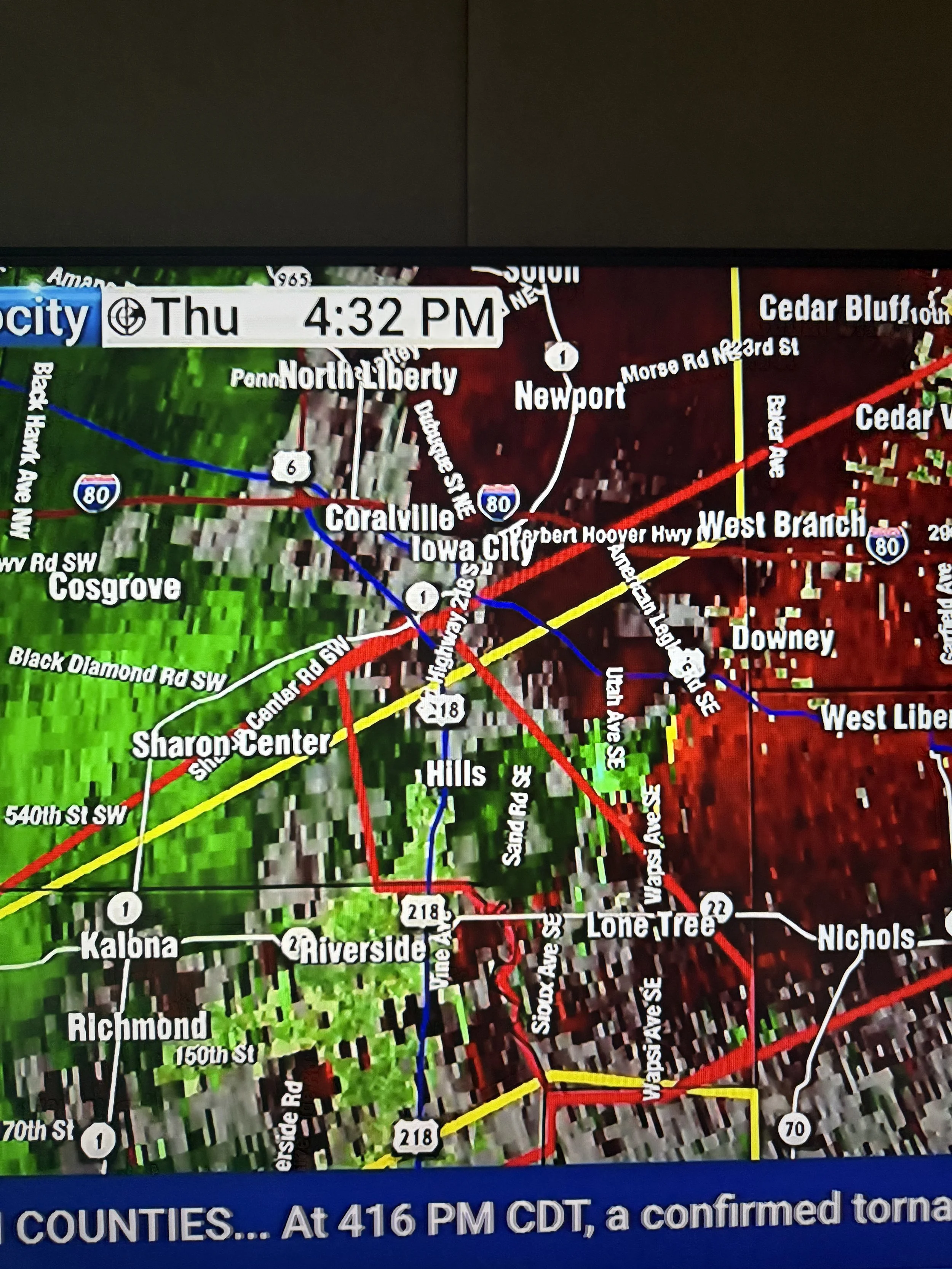
⚠️The emergency alert tones sounded from dozens of phones in the audience.
I was about 80% through my keynote in Iowa Thursday when the chorus got my attention.
"What is that?" I asked the audience of cancer care providers.
🌪️"Tornado warning," several oncology nurses replied.
No one panicked. (Cancer nurses don't scare easily.)
"So... do we need to take cover?" I asked the coordinator of the event.
"We are checking on that. In the meantime, we're on the ground floor in a room with no windows. So, looks like you have extra time for your keynote. We're not leaving," she laughed.
🤔What a perfect analogy for my message.
🫂In the middle of emergencies, alerts, and danger... you can be safe. Valued. Affirmed and acknowledged. It's the experience I provide every audience of burned out caretakers.
While the warning continued, I reached my last two points.
First, I had them all stand and look in each other's eyes.
Then they repeated these reminders to one another:
"You do difficult work."
"You do important work."
"If you get overwhelmed sometimes, it's not your fault."
"You are an effing hero. Never forget that."
🥹
Then, I asked them to face the front, place a hand on their own heart, and repeat after me some new self-talk.
"I do difficult work."
"I do important work."
"If I get overwhelmed sometimes, it's not my fault."
"I am an effing hero. I'll never forget that."
😭
Finally, it was time for my favorite part of every keynote. The introduction of a bucket list.
Since University of Iowa Health Care was the host, they asked if attending a Indiana Fever game is on my bucket list. The LOVE Caitlin Clark (who doesn't?).
Then, predictably, they continued the CC theme by asking what #22 is on my bucket list.
One attendee said she wanted to take a trip without her kids (I hear that bucket list item often).
Another wanted to plant a Zinnia garden. Others wanted to travel or continue their education.
🌪️Thankfully, we wrapped up the keynote without getting sucked into a funnel cloud.
And the message landed again--your work is hard. Burnout happens. You can make your own choices. It's not your fault.
Oncology coworkers. I wish I could present to every single one of them. Without tornado warnings.
The Workforce Has Shifted: Why Burnout, Workplace Stress, and Leadership Matter More Than Ever
For years, many leaders operated under a simple assumption: most employees were doing okay, and only a small percentage were truly struggling.
For a long time, the data supported that belief.
But something has changed in the last few years.
A Turning Point in Workplace Wellbeing
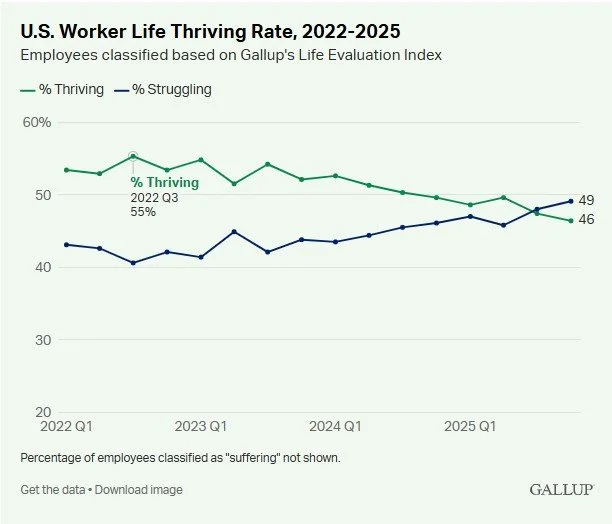
Until 2022, data from Gallup consistently showed that a majority of U.S. workers described themselves as thriving, while a smaller percentage reported struggling or suffering in their lives and work.
By 2023, when I began speaking more frequently on workplace burnout and employee wellbeing, those lines were moving in the wrong direction—fast.
They were on track to cross for the first time.
And now, they have.
In 2026, more U.S. workers report that they are struggling or suffering (54%) than thriving (46%). That’s not just a statistic. It’s a signal of a workforce under sustained pressure.
Burnout, Job Dissatisfaction, and a Stuck Workforce
The implications go beyond engagement scores.
More than half of U.S. employees are actively looking for a new job
Yet only 28% believe it’s a good time to find a quality job
Workers feel stuck, discouraged, and increasingly burned out
This is where workplace burnout, job dissatisfaction, and chronic stress collide.
Employees aren’t just unhappy. They are trapped.
And that creates a dangerous combination for organizations:
low morale, declining productivity, disengagement, and high turnover risk.
Why Traditional Solutions to Burnout Are Falling Short
So how are many organizations responding?
Perks.
Pizza parties. Bonuses. Small morale boosters.
To be clear—compensation and appreciation matter. No one is turning those down.
But they are not solving the core problem.
Burnout is not a pizza problem.
And it’s not primarily a pay problem.
It’s a leadership and workplace culture problem.
The Real Solution: Leadership Development and Workplace Culture
If the workforce has changed, leadership must change with it.
Today’s employees need more than direction—they need support, clarity, psychological safety, and leaders who understand the human side of work.
That means investing in leadership development, emotional intelligence, and people-first management skills.
Managers are not just task supervisors anymore. They are culture carriers.
They have the greatest influence on whether employees:
feel supported or isolated
stay engaged or mentally check out
remain in their role or start planning an exit
When you improve leadership, you improve the entire system.
The Overlooked Reality: Leaders Are Burned Out Too
There’s another layer many organizations miss:
Leaders themselves are struggling at similar levels.
They are navigating:
increased expectations
constant change
emotional load from supporting their teams
pressure from senior leadership
This is why leadership development has a double impact:
it supports the leader and every employee they manage.
Building a Workplace Where Employees Can Thrive Again
If more than half your workforce is struggling, incremental fixes won’t work.
Organizations that want to stand out—those that want engaged, loyal, and thriving employees—must take a different approach.
They must:
prioritize workplace wellbeing
invest in leadership skills, not just technical skills
create psychologically safe and supportive environments
treat burnout as a systemic issue, not an individual weakness
The organizations that do this well won’t just survive this shift.
They’ll become the exception.
A Different Kind of Workplace Is Possible
Right now, most organizations are dealing with a workforce that feels burned out and stuck.
But it doesn’t have to stay that way.
With the right leadership development strategy, you can create a workplace where people:
feel valued
stay engaged
and actually thrive
If you’re ready to invest in your leaders and build a healthier, more sustainable workplace culture, let’s talk.
Want to go deeper?
You can explore the full data and trends directly on Gallup’s site.
10 Ways to Make Orientation Burnout-Proof (Especially in Healthcare and Human Services)
Burnout doesn’t start six months into the job. The stage is set from day one.
Orientation and onboarding are supposed to help new employees feel prepared, supported, and connected to purpose. Too often, they do the opposite—information overload, emotional whiplash, or silence around the parts of the job that are actually heavy.
Whether you work in healthcare, education, nonprofits, or any people-centered field, the way you welcome new staff can either prevent burnout or accelerate it.
Here are 10 ways to make orientation a foundation for resilience—not exhaustion.
1. Shadow First, Train Second
Before handing someone a binder and a login, let them watch real work. Shadowing helps them connect policies to purpose, instead of drowning in procedures they don’t understand yet.
2. Pair Them with a Real Mentor—Not Just a Cheerleader
Assign a peer who will tell the truth. Someone who knows the job, remembers what it’s like to be new, and doesn’t pretend everything is perfect. This builds trust faster than any handbook.
3. Normalize Moral Distress from Day One
Especially in healthcare, social work, education, and ministry. Say it out loud: “Some days, you’ll know the right thing to do and won’t be able to do it. When that happens, here’s who you talk to.”
Naming it prevents shame and isolation later.
I mandated new coworkers to see a therapist after 90 days on the job—to normalize the need.
4. Explain How to Speak Up—And What Happens When They Do
Don’t just say, “We value feedback.” Tell them the exact process for reporting concerns, who will respond, and how they’ll be supported. Uncertainty breeds silence. Silence breeds burnout.
Most people need to be incentivized to speak up, and reassured that it’s expected.
5. Build in Reflection Time, Not Just Training Time
Most orientations are a firehose of information. Add 5–10 minutes at the end of each section with questions like:
What surprised you today?
What felt heavy?
What do you still need to know to feel ready?
Reflection helps them process instead of just absorb.
6. Teach Them How to Use PTO—Not Just How to Request It
New staff need to hear: “You are expected to rest. You don’t have to be exhausted to use your time off.” Better said in month one than year three.
7. Show Them What “Good Work” Looks Like Here
Not the poster version—the real version. Invite a respected employee to talk about a moment they were proud of, and a moment they struggled. This builds identity and purpose. People want to know how they can “win” at work—what qualifies as a job well done.
8. Introduce the Emotional Support System, Not Only the IT System
Most orientations explain payroll, passwords, and parking. Very few explain where to go when the job hurts emotionally. Provide names, email addresses, chaplains, employee support teams, wellness programs—real people, not just vague reassurances.
9. Let Them See Wins Early
Give a small, meaningful task they can complete in the first week. Let them contribute instead of just observe. Purpose is a burnout buffer.
Praise them for the tiniest positive actions—it communicates values.
10. Ask How They’re Really Doing (Before It’s Too Late)
Three to four weeks in, check back. Not with “How’s it going?” but with:
What’s harder than you expected?
What’s going well?
Where do you need support?
Catching burnout early is a leadership skill.
Want to Know How Burned Out Your Team Already Is?
Before fixing orientation, measure what staff are actually experiencing.
You can take or share my free burnout test here: MyBurnoutTest.com
Need Help Building This into Your Culture?
I work with hospitals, schools, nonprofits, and companies to build orientation and leadership practices that prevent burnout—not just respond to it.
You can explore speaking and workshop options here:
https://patrickriecke.com/live-presentations
Or, for self-paced team tools, scripts, and reflection guides, visit:
https://www.myburnouthub.com/learn-more
15 Low-Cost Ways to Reduce Burnout (That Work Better Than Pizza Parties)
You can’t cure burnout with cupcakes or a nacho bar in the break room.
Most employees aren’t desperate for snacks or swag. They’re desperate for manageable workloads, a voice in decisions, and a workplace that treats them like people—not machines.
Here are 15 meaningful, low-cost ways leaders are actually reducing burnout. No balloons. No “wellness carnival.” Just real changes that make work more human.
1. Quiet Hour (No Meetings, No Messages)
Block one hour each week for protected work time. No meetings. No chat notifications. Don’t just suggest it—defend it.
2. Peer Coverage for Actual Breaks
Instead of “take a break if you can,” build a simple coverage plan so people can walk away without guilt or chaos.
3. Rotate Emotional Labor Jobs
Some people always handle upset families, angry customers, or grieving patients. Rotate these roles or give those staff time to recover afterward.
4. “No-Reply Fridays” or Email-Free Windows
One day or one morning a week with no internal emails or non-urgent messages. Teach people to pause before pressing send.
5. Stop Rewarding Overwork
Don’t celebrate the employee who stays until 9 p.m. Celebrate the one who finishes on time and still delivers quality.
6. Let People Say ‘I Don’t Know’ Without Fear
Psychological safety reduces burnout more than any wellness challenge. Admitting uncertainty shouldn’t be a career risk.
7. Give Schedule Input, Even in Small Ways
Let people choose between early/late starts, trade shifts, or block certain hours for focused work. Autonomy is fuel. [Not always possible, but sometimes overlooked when it is]
8. “What Should We Stop Doing?” Meetings
Once a quarter, ask the team which tasks, meetings, or reports are wasting time. Then actually eliminate one.
9. Fix One Broken Workflow
Pick the process everyone complains about—and fix it. Don’t make employees work around dysfunction and call it resilience.
10. Give People Real Recovery Days (Not Random PTO)
If someone’s been in an emotionally heavy season—ICU staffing crisis, student crisis, hospice cases—offer one recovery day without making them use vacation hours.
11. Invite, Don’t Assign, New Initiatives
“Who wants to help lead this?” gets better energy than “I put you on the committee.” Choice matters.
12. Ask Better Check-in Questions
Try:
What’s one thing making work harder than it needs to be?
Is anything getting in the way of you doing your job the right way?
Real questions lead to real solutions.
13. Protect Learning Time
Give staff a small window monthly for professional growth—an article, CE module, or leadership video. It tells them growth matters more than constant output.*
14. Leader Walk-Arounds With One Question
Not clipboard checklists. Just one question: “What do you need that you don’t have?” Listen. Respond to their actual needs, not your own guesses.
15. Let People Finish the Work They’re Proud Of
When someone is forced to rush, cancel, or compromise quality over and over, it creates moral distress. Give them time to do it right at least once a week.
Want to Know Where Your Team Really Stands?
Before making changes, measure burnout honestly. You can use my free assessment tool here:
MyBurnoutTest.com
Ready to Build This Into Your Culture?
*These practices come straight from my workshops and the leadership path inside The Burnout Hub—a resource for teams who want to prevent burnout with real strategies, not slogans.
Explore it here:
https://www.myburnouthub.com/learn-more
If you'd like me to train your leadership team or speak at your event, you can check availability here:
https://patrickriecke.com/live-presentations